The American president returned from China with talking points about trade, aircraft and cooperation. The more important result was not a transaction, but a message: Beijing now wants the relationship managed on terms of strategic stability, not American primacy.
Donald Trump went to Beijing as a salesman. Xi Jinping received him as the leader of a state that no longer accepts the old hierarchy. That was the real accomplishment of the visit. Not a grand bargain. Not a historic reset. Not a new China-U.S. friendship. What emerged was something colder and more consequential: a public demonstration that the world”s two largest powers are now trying to manage rivalry without allowing it to become war.
Trump returned to the United States with the language he prefers: deals, aircraft, agriculture, tariffs, markets, help on Iran, and personal chemistry with Xi. But the public record does not support the idea of a decisive commercial breakthrough. The visible results were limited, provisional and politically useful rather than strategically transformative.
That does not mean the visit was empty. It means the wrong scoreboard is being used. Trump measures summits by announcements. Beijing measures them by frameworks. On that more serious measure, China achieved more than Trump did.
The official Chinese readout matters. Beijing did not frame the summit as a Trump-style commercial negotiation. It framed it as an exercise in strategic stability. Xi asked whether China and the United States could avoid the Thucydides Trap, manage global challenges together, and build a new paradigm of major-country relations. That language is not decorative. It is Beijing”s way of saying that the relationship is now between two major powers, not between a hegemon and a subordinate.
The ceremony was large. The substance was limited.
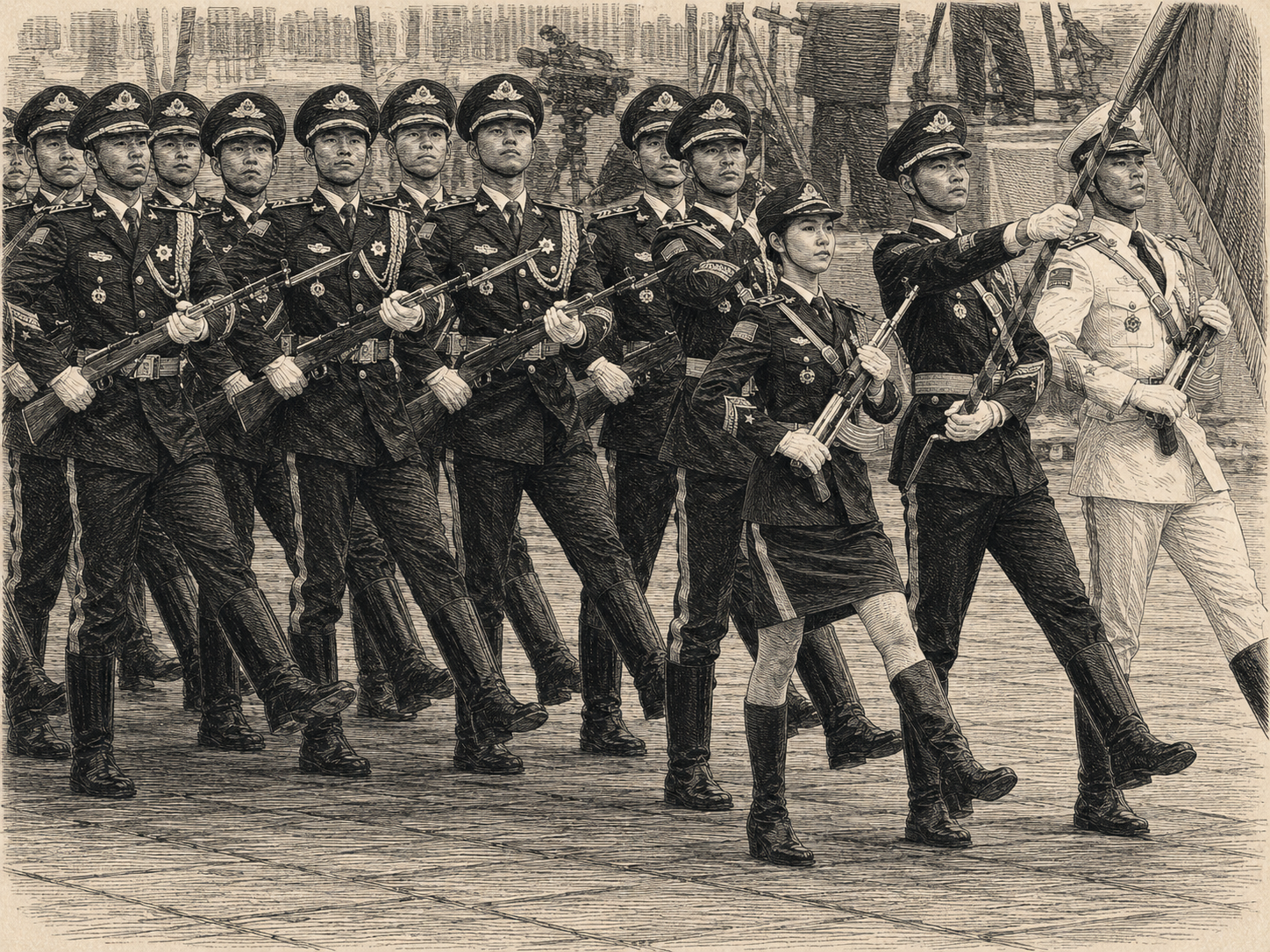
The choreography mattered. Trump was received with all the symbolism a Chinese state visit can provide: formal welcome, banquet, senior officials, business figures, and the theatre of great-power respect. That suited Trump. He likes summits that look like victories before the communique is read.
But the hard outcomes were modest. There was talk of aircraft. There was talk of agriculture. There was talk of tariff understandings. Yet the central structural disputes between Washington and Beijing were not resolved. Advanced technology controls remain. Industrial competition remains. Taiwan remains. The military balance in the western Pacific remains. The question of China”s relationship with Russia and Iran remains.
The summit did not end the rivalry. It stabilised it. That is not nothing. In the present climate, it may be the most either side can achieve. But stabilisation is not the same as American success.
Xi”s message was not commercial. It was strategic.
The most important document from the summit was not Trump”s account on the flight home. It was the Chinese readout. Xi”s formulation was precise. China and the United States, he said, had to answer the questions of history, the world and the people. Could they avoid the trap in which a rising power and an established power drift into conflict? Could they provide stability? Could they build a future for both peoples?
That is a very different frame from Trump”s. Trump came to China after a presidency built around pressure: tariffs, export controls, military signalling, sanctions, energy pressure, and the rhetoric of American restoration. Xi answered with the vocabulary of managed power. The Chinese proposition was not submission. It was coexistence under constraint.
That is why the visit should not be read as a humiliation in the simple theatrical sense. Trump was not insulted. He was hosted. But the hosting itself carried the message. China was not pleading for relief. It was offering a framework. The United States could work with China inside that framework, or it could continue to test the limits of American leverage.
The summit exposed the new shape of the rivalry. The United States still has military alliances, financial power, technology controls and global reach. China has manufacturing scale, rare earth leverage, industrial depth, a large domestic market and the diplomatic confidence of a state that believes time is no longer automatically on Washington”s side. The meeting did not settle that contest. It confirmed that both sides now know how dangerous it has become.
Taiwan was the hard red line
The sharpest section of the Chinese readout concerned Taiwan. Xi described it as the most important issue in China-U.S. relations. He warned that mishandling it could lead to clashes and even conflict. He said that Taiwan independence and cross-Strait peace were as irreconcilable as fire and water.
That language was not incidental. It was the strategic boundary marker of the summit. Beijing was telling Washington that trade can be negotiated, tariffs can be paused, agricultural purchases can be discussed, and aircraft orders can be floated. Taiwan is different.
Trump”s own remarks after the meeting were revealing. He said he did not want to travel thousands of miles to fight a war over Taiwan and suggested that both China and Taiwan should cool down. That was not a formal policy change. But it was an admission of distance, cost and danger.
For Beijing, that matters. China has spent years watching Washington arm Taiwan, send political delegations, deepen military contacts, and maintain ambiguity while insisting that it still recognises a One China framework. Xi used the summit to force the issue back into the open. America may preserve its formula. China wanted to make clear that the formula now has limits.
Rare earths were the silent balance sheet
Beneath the ceremonial surface lay a harder industrial reality. America wants to restrict China”s access to advanced semiconductor technology while also expecting access to Chinese-controlled materials, magnets and industrial inputs that are essential to modern weapons, electronics and high-technology manufacturing.
That contradiction sits beneath the summit. The United States still wants technological dominance. China still holds chokepoints in supply chains that Washington needs for both civilian industry and military replenishment. The more the United States militarises the technology relationship, the more China can treat materials access as a strategic counter-pressure.
This is why the absence of a major rare earth breakthrough matters. It suggests that China did not trade away its leverage for ceremony. Trump may have received warmth, respect and carefully managed language. But Beijing appears to have kept the deeper industrial cards in its hand.
The hidden contest is industrial. Tariffs are visible. Rare earths, magnets, chips, batteries, shipbuilding capacity and missile production are less visible, but more decisive. A great-power rivalry is not won by press conferences. It is won by the ability to build, replace, repair and scale. That is the uncomfortable context behind the Beijing summit.
Iran showed America”s need for China
Trump also raised Iran and the Strait of Hormuz. That was revealing in itself. China has reasons to want Gulf stability. It imports large volumes of energy and has no interest in a prolonged war that disrupts maritime trade. But Beijing also has relationships and leverage that Washington cannot ignore.
A president who claims unrivalled American strength still found himself asking China to help manage a crisis Washington could not settle alone. That is the larger pattern. On Iran, as on Taiwan and rare earths, the visit revealed the limits of pressure. America can still punish, sanction, strike and threaten. But punishment is not the same as control.
China”s position is likely to remain deliberately balanced. It wants open sea lanes, stable energy flows and no uncontrolled escalation in the Gulf. But it will not convert itself into an auxiliary arm of American policy. That is the point Washington often misses. Beijing may help manage a crisis, but it will not surrender its strategic independence to do so.
Putin”s arrival completes the image
The timing is difficult to ignore. Trump leaves Beijing. Vladimir Putin is expected to arrive days later. The sequence gives the summit its final meaning. Beijing is no longer merely one pole in an American-led system. It is the venue through which other powers now move.
Trump came seeking stabilisation with China. Putin comes to deepen the China-Russia conversation. Iran sits in the background. Taiwan sits in the foreground. Rare earths and chips run beneath the floorboards.
The United States remains powerful. It remains militarily formidable. It remains financially central. It still has allies, fleets, bases, markets and technological strengths. But the Beijing visit showed that power no longer converts automatically into obedience.
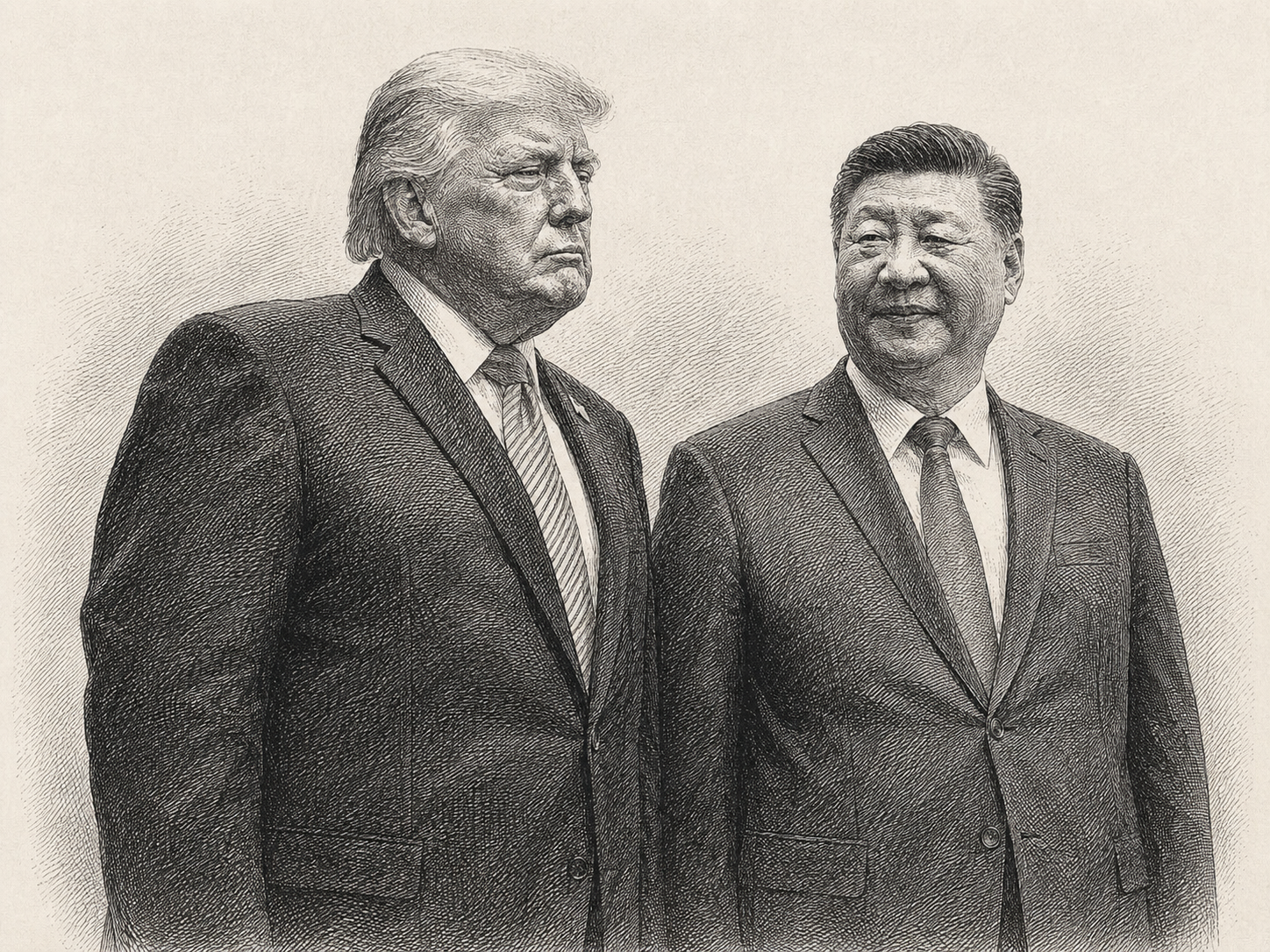
That is the real story. Trump did not return empty-handed. He returned with a temporary stabilisation, some preliminary commercial language, and the political material for a sales pitch. But Xi kept the strategic frame. China did not present itself as a supplicant. It presented itself as a co-manager of global risk.
Trump went to Beijing looking for a deal he could describe as victory. Xi gave him something more durable and more difficult: a doctrine of managed rivalry on Chinese terms.