A late-night fireball near Beit Shemesh has been described by Israel’s defence industry as a planned rocket-propulsion test. But Israeli media have already exposed the deeper problem: the blast was large, public, unexplained in advance, and occurred at a missile-engine facility in a country already on edge over Iran.
The explosion near Beit Shemesh was officially a test. That is the safe sentence. It may also be the true sentence. But it is not the whole sentence.
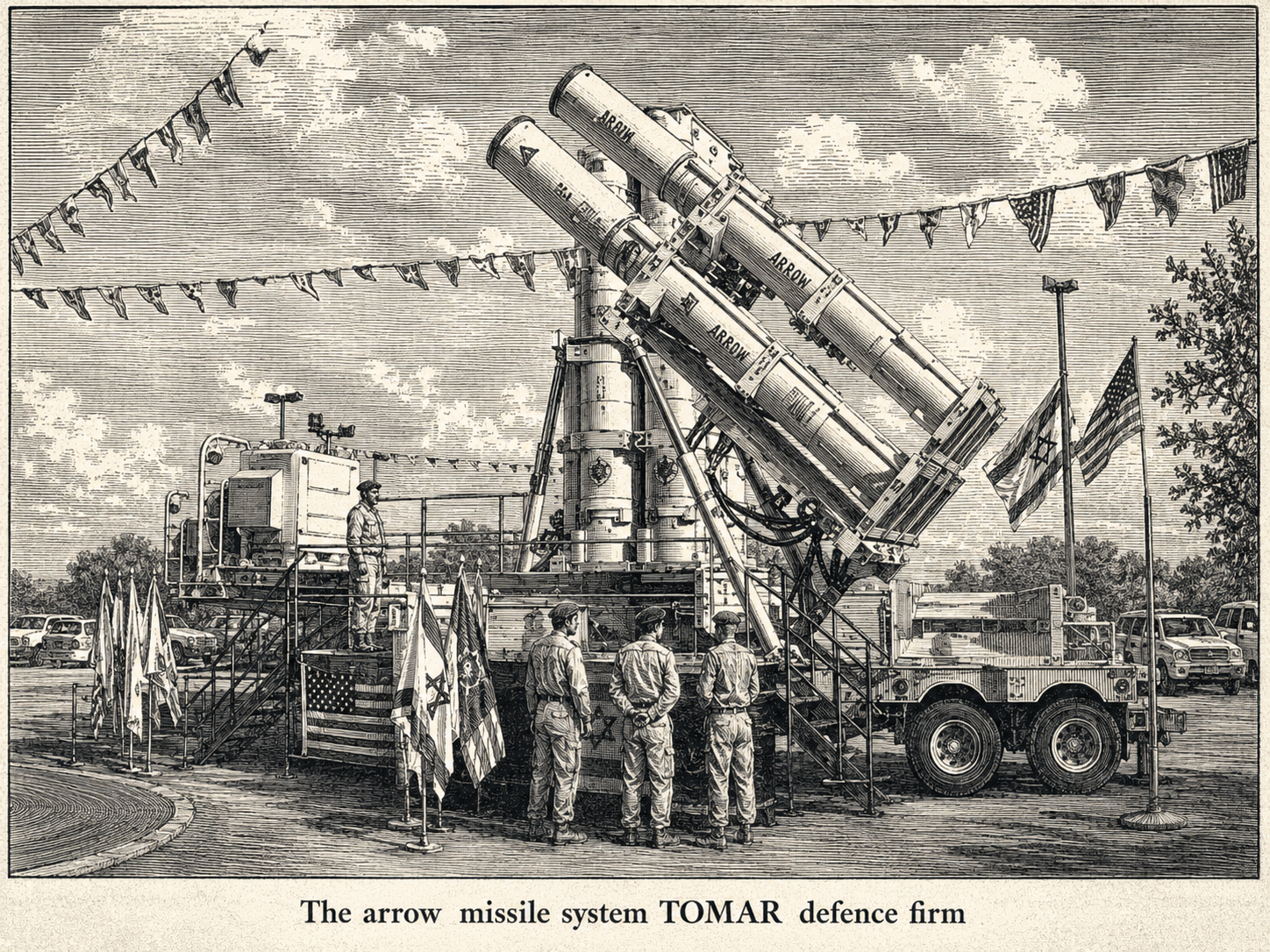
Late on Saturday night, the sky west of Jerusalem suddenly opened with fire. Residents near Beit Shemesh saw a sharp flash, a rising plume and the kind of orange glare that does not belong to an ordinary industrial accident. It was brief, violent and visible from a distance. For a few seconds, no one outside the defence establishment could know whether they were watching a planned experiment, a failed test, an attack, or the beginning of something larger.
That uncertainty is the story.
In another country, in another season, the explanation might have settled quickly. A defence contractor carried out a test. The blast was controlled. The authorities knew. No one was hurt. The public can move on.
But Israel is not living in another season. It is living inside a war climate, under the memory of Iranian missile attacks, falling debris, air-defence alarms and the permanent suspicion that escalation may arrive before explanation. In that atmosphere, a night-time fireball over a missile-related facility cannot remain a technical footnote. It becomes a public event.
Israeli media quickly linked the blast to Tomer, the government-owned defence company involved in rocket and missile-engine production. Tomer said the explosion was a coordinated and pre-planned experiment. Israeli reports said the company presented the event as controlled and carried out according to plan. Police reportedly said nothing unusual had happened. The IDF did not immediately provide a fuller public explanation.
That was the official frame. It was narrow, orderly and reassuring. But the surrounding details made the reassurance less complete.
The Beit Shemesh municipality said it had not been informed in advance by Tomer or by the defence establishment. Fire and Rescue Services said the defence establishment had notified its dispatch centre so firefighters would understand the event if alarmed residents called. The residents themselves, however, appear not to have been warned.
What is confirmed: Israeli media reported a large late-night explosion near Beit Shemesh, in the Har Tuv area, linked to a Tomer defence-industry site. Tomer described it as a planned and coordinated experiment. Local residents were alarmed by the scale of the blast, and the municipality said it had not received advance notice.
This is not a minor communications issue. It is the difference between a state speaking to itself and a state speaking to its public.
The defence system may have known what was happening. The emergency services may have known enough to handle calls. But the people who saw the sky ignite were left to interpret it for themselves. In wartime, that gap is dangerous. It gives speculation the first draft of events.
Tomer is not an ordinary industrial plant. It is part of Israel’s strategic defence infrastructure. Israeli reporting describes it as producing rocket and missile engines, including systems associated with Israel’s air defence and long-range strike capabilities. A blast at such a site, especially one involving rocket propellants or solid fuel, carries a meaning far beyond its perimeter fence.
That does not mean it was sabotage. It does not mean it was an Iranian strike. It does not mean the official explanation is false. At this stage, there is no confirmed public evidence proving any of those claims.
But the absence of proof is not the same as the presence of trust.
The scale of the blast, the late hour, the sensitive location and the lack of public warning created a space in which the official explanation had to compete with what people had just seen. A fireball is not a press statement. It produces its own politics.
Beit Shemesh itself matters in this reading. It is not merely a dot on the map. It sits within a country that has already watched Iranian missiles cross its skies, has heard sirens at night, has seen interception fragments and impact sites become part of ordinary civic geography. People in that environment do not experience explosions abstractly. They experience them through recent memory.
That is why the blast near Har Tuv cannot be written off as a routine defence test simply because the company says it was planned. It may well have been planned. But planned events can still reveal institutional weakness. A planned detonation can still be poorly communicated. A controlled test can still expose a loss of public confidence.
Israel’s problem is not only whether the explosion was controlled inside the facility. It is whether the meaning of the explosion was controlled outside it.
What is not confirmed: There is no confirmed public evidence that the Beit Shemesh explosion was caused by an Iranian attack, sabotage operation or uncontrolled accident. Those possibilities may circulate because of the war climate and the military nature of the facility, but they should not be stated as fact without stronger evidence.
The responsible conclusion is therefore restrained, but not complacent. This was not proof that Iran struck Israel. It was not proof that Israel’s missile industry suffered a catastrophic failure. It was not proof that the state lost control of a weapons site.
It was proof of something subtler: Israel is now operating in an atmosphere where even its own controlled explosions can be mistaken, for several minutes, for the next stage of war.
That is the larger significance of the Beit Shemesh fireball. The official story may be accurate. The event may have been planned from beginning to end. But the public reaction showed how thin the boundary has become between defence testing and wartime panic, between secrecy and distrust, between a blast the state understands and a blast the country experiences.
Israel’s defence establishment wanted the public to see a controlled experiment. What many residents saw first was a sudden light in the night, rising from a missile-engine facility, with no warning and no immediate explanation. In a country already waiting for the next escalation, that was enough.