China’s southern city of Nanning is trying to build an economic specialism around adapting artificial intelligence for Southeast Asia, with the ambition of becoming a regional hub for information, computing and digital services linking China with its ASEAN neighbours. Drawing on Guangxi’s border with Vietnam, its longstanding trading relationships and its cultural and linguistic connections across the region, the city hopes to turn familiarity with neighbouring markets into a new source of income. The plan brings together computing infrastructure, university research, language training and government incentives to help businesses adapt Chinese technology for use in Southeast Asian factories, farms, schools and public services. Guangxi University and other regional institutes are being drawn into that effort, training people who can combine technical skills with an understanding of the customers they hope to serve. Political backing and new infrastructure give the project substance. Its commercial promise still has to be demonstrated: Nanning’s standing as an information hub will ultimately depend on useful services, paying customers and business that lasts beyond the initial public support.
Before Nanning offers you artificial intelligence, it offers a bowl of noodles. Its signature laoyoufen brings together sour bamboo shoots, fermented black beans, garlic and chilli: a sharp, pungent introduction to a city whose everyday life can disappear behind the language of development plans. When Zhongshan Road reopened after renovation this February, local reporting found customers returning to familiar food stalls beneath the street’s arcaded buildings. There were old orders to remember and old acquaintances to greet. [35]
The city has had less comfortable associations, too. Its snake trade belongs to a documented history of wildlife markets and restaurants. A study of the 1990s located a wildlife market on downtown Hangzhou Road; in 2020, Xinhua reported snake restaurants closing or considering different menus as restrictions took effect. The records capture an older commercial world, and the pressures that were changing it. [36]
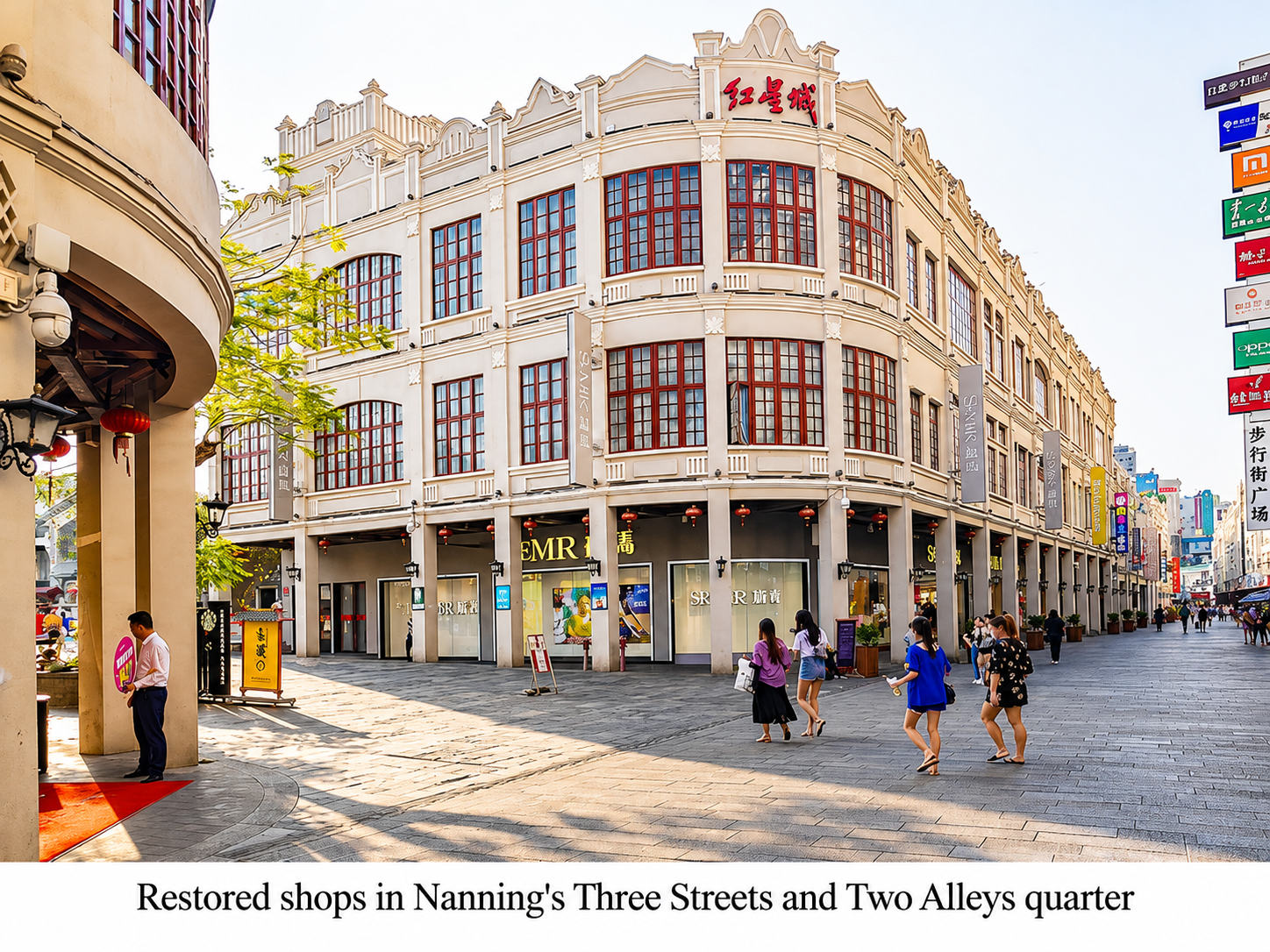
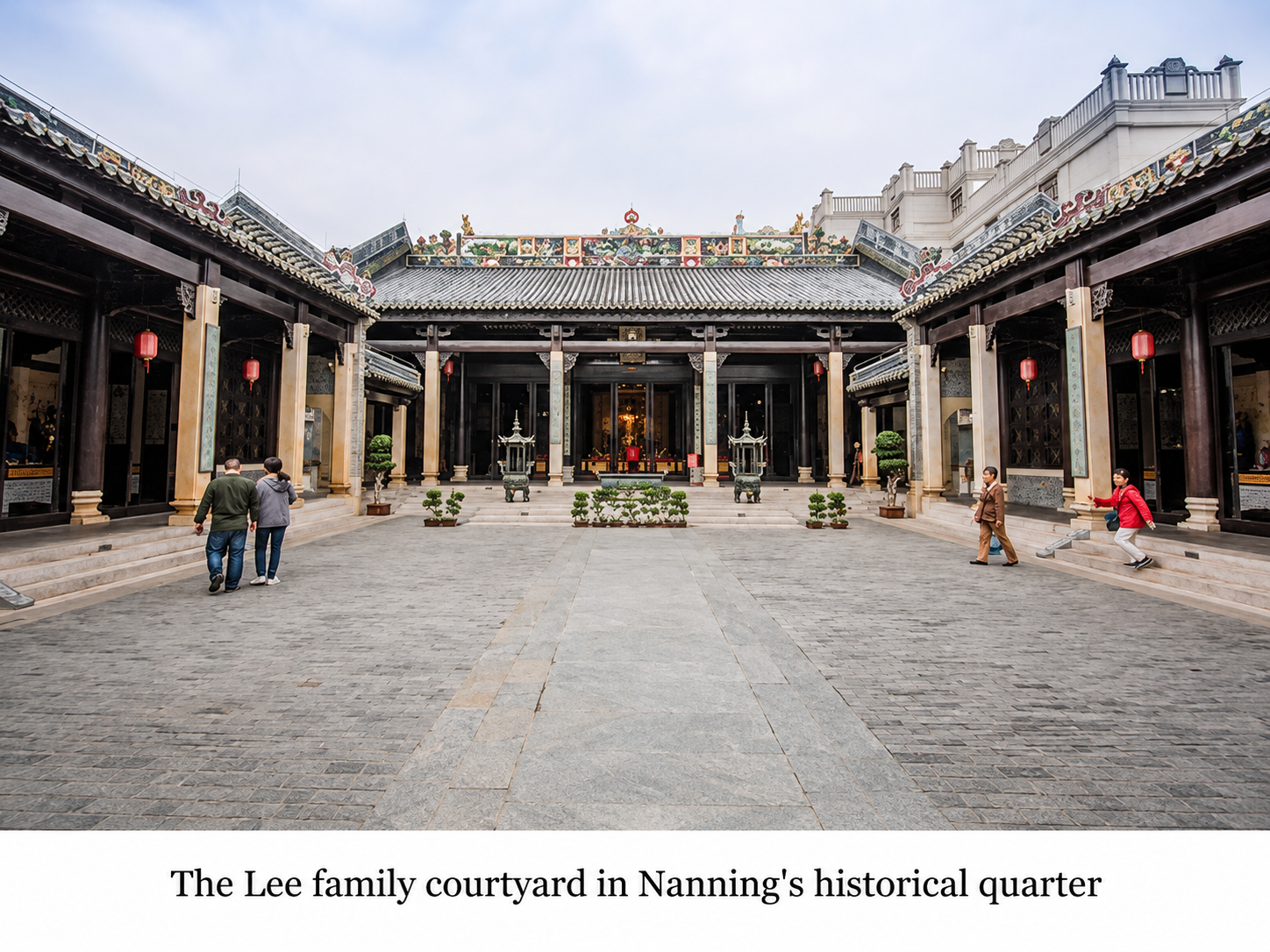
Nanning is changing, and has been for centuries. The restored shops and courtyards of its Three Streets and Two Alleys quarter now accommodate cafés alongside local food businesses. The old commercial city is being remade for another generation of customers. [37] Its leaders want a more ambitious reinvention as well: a place in the business of artificial intelligence.
The most revealing explanation of that ambition begins with an admission of weakness. Guangxi lacks technology, talent and capital, its Communist Party secretary, Chen Gang, acknowledged in March. Competing head-on with China’s richer regions across computing and algorithms was beyond its strengths. His answer was to look south. [1]
Guangxi borders Vietnam. Its capital has spent years cultivating Southeast Asian relationships through trade, exhibitions and official exchanges. Now it wants to bring in Chinese AI, adapt it to neighbouring markets and sell services that their businesses will keep using. The proposition is plausible. Being someone’s gateway, however, is only a livelihood if enough people choose to pass through it.
A borderland with a longer memory
Even the city’s name carries the memory of a frontier. Nanning acquired its present name in 1324, expressing an aspiration for peace in the south. Its administrative origins reach back to AD318; under the Tang dynasty it was known as Yongzhou. Governing the borderlands and connecting them to the rest of China were concerns long before anyone proposed a digital gateway. [10]
Guangxi’s history includes commerce and conflict across that frontier. Its name derives from the western division of Guangnan established under the Song dynasty in 997. Trading centres linked the region with its neighbours, while wars repeatedly disrupted those connections. Nanning became the seat of Guangxi’s provincial government in 1950; in 1958, Guangxi became the Zhuang Autonomous Region, with Nanning as its capital. [11]
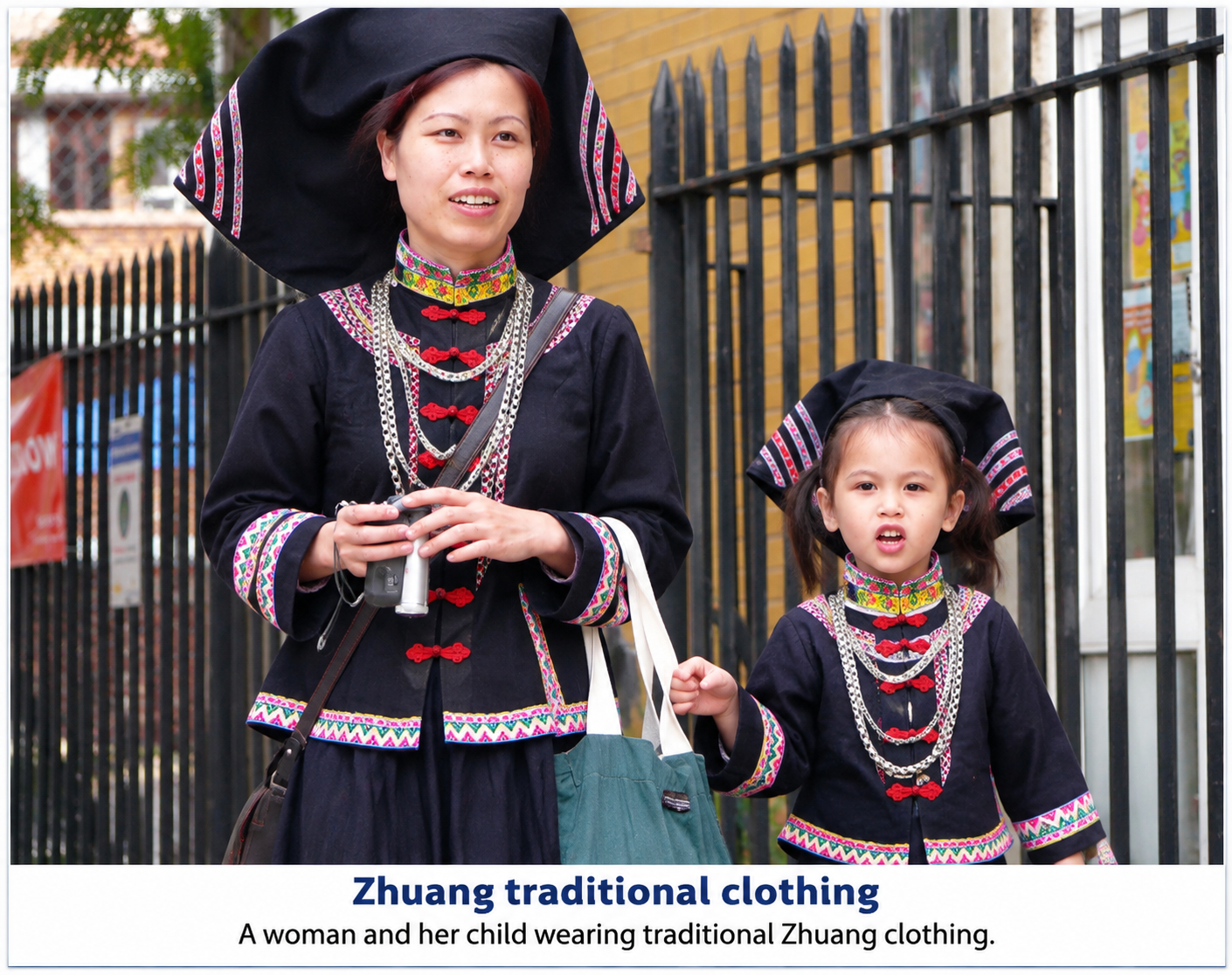
The word “Zhuang” matters. It points to a region whose people and languages complicate any easy picture of a uniform China. In the 2020 census, ethnic minorities made up 37.52 per cent of Guangxi’s population; approximately 15.72 million people, or 31.36 per cent, were Zhuang. Han Chinese remained the majority. Those are regional figures, covering far more than the capital. [12]
Alongside the Zhuang live Yao, Miao, Dong, Mulao, Maonan, Hui, Jing, Yi, Shui and Gelao communities, among others. Their languages and traditions are distinct. Folk singing, embroidered balls and bronze drums are associated with the Zhuang’s Sanyuesan celebrations, held around the third day of the third lunar month; related celebrations and drum traditions also belong to other communities. [13]
There are cultural connections across today’s borders. Zhuang languages belong to the Tai linguistic grouping, which also includes Thai and Lao; some southern Zhuang varieties are closely related to Tay and Nung in Vietnam. These relationships help explain why looking towards Southeast Asia is more than a recent policy invention. They do not make the languages interchangeable or their speakers a single market. [14]
For a technology industry trying to understand its neighbours, this is potentially valuable knowledge. Yet ancestry does not write software, and linguistic kinship does not guarantee a sale. There is also a question for Guangxi itself: will the opportunities reach its diverse communities, or remain concentrated among the tenants of new business parks?
Trade routes before the digital gateway
Follow the older trade routes and the modern strategy becomes easier to understand. One ran from Yunnan through Guangxi to Nanning, then southwest through Chongzuo and Lang Son towards Hanoi and the coast. The city earned a place between inland China and Vietnamese markets. Vietnam remains the clearest historical connection in Nanning’s claim to understand the region to its south. [15]
Guangxi’s coastline opened another route. Archaeological research at Hepu, near present-day Beihai, documents its participation in maritime trade during the Han dynasty. Imported glassware and beads reveal connections through Southeast Asia towards South Asia and beyond. This was the history of a coastal port in Guangxi, distinct from Nanning’s inland role. [16]
Historians reconstruct sea connections through Funan, a polity associated with parts of present-day Cambodia and southern Vietnam, and onward through the Gulf of Thailand towards the Thai–Malay peninsula. Cambodia, Thailand and Malaysia help modern readers locate this trading world, but today’s states and borders did not yet exist. Goods could pass through several ports and intermediaries rather than travel directly between two places. [17]
Laos belongs to the overlapping mainland trading world. Research on Guangxi’s mountain routes places them within wider exchanges reaching into mainland Southeast Asia, while studies of Yunnan’s commerce identify Laos as a neighbouring trading partner. This supports a history of interconnected regional networks; it does not establish that Nanning was the principal hub for Lao trade. [18]
These routes do not establish an unbroken success story. They show why the direction of travel makes sense. Goods once needed merchants who knew the next market; software also needs people who understand the customer at the other end.
What the gateway would actually sell
The official formula is unusually clear: research and development in Beijing, Shanghai and Guangzhou; integration in Guangxi; application in ASEAN, the Association of Southeast Asian Nations.
Much of the potential business lies in that unglamorous middle word, “integration”. A model that gives an impressive demonstration still has to fit the language and working practices of a factory, school or electricity company. Someone must connect it to existing systems, explain it to staff and answer when it fails. That work could sustain firms which never invent a world-leading model of their own.
It is also where a grand regional vision meets the awkward particulars of a customer’s day. Proximity can open a conversation. Useful software has to earn the next one.
Nanning starts with a substantial economy. Its 2025 statistical communiqué put municipal GDP at RMB621.25 billion, with services accounting for 70.1 per cent. These figures cover the wider administrative municipality, including rural territory. They describe a large services economy, rather than proving that an AI transformation has already occurred. [2]
The broader regional backdrop adds urgency. An October report citing Guangxi’s statistical authorities put economic growth at 2.5 per cent in the first nine months of 2026. Building new sources of income matters against that modest pace of expansion. It would nevertheless be premature to attribute either regional weakness or future recovery to an AI programme still taking shape. [3]
The officials behind the ambition
Nanning has something more consequential than a municipal slogan: support from the top of China’s political system.
During his December 2023 visit to the China–ASEAN Information Harbor company in Nanning, Xi Jinping called for stronger information infrastructure and applications to support cooperation with ASEAN. That established a broad direction for digital connectivity, rather than a detailed blueprint for every subsequent AI project. [4]
In September 2025, the National Development and Reform Commission and Guangxi jointly convened a ministerial roundtable in Nanning and announced the launch of the China–ASEAN Countries AI Application Cooperation Center. Its remit included infrastructure, open services, industrial partnerships and training. [5]
Such backing can bring departments, investors and universities around the same table. It gives the effort weight, though it cannot settle the question of demand.
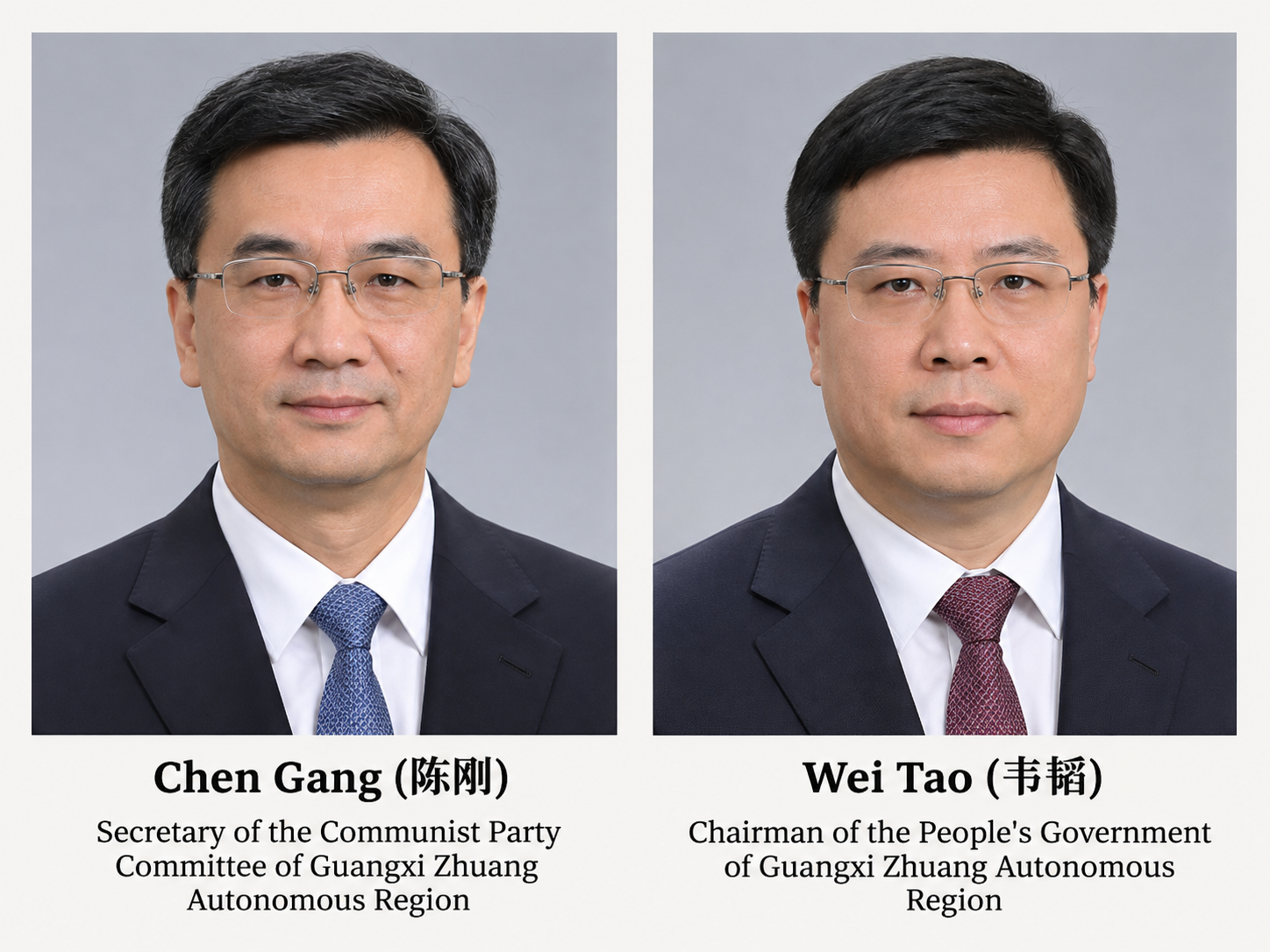
Chen Gang, Guangxi’s Party secretary since December 2024, brings a scientific education and experience of urban administration and major development projects to that task. He holds a doctorate in inorganic chemistry from Peking University and began his career in research and engineering. His subsequent posts included leadership of Beijing’s Chaoyang district, service as Guiyang Party secretary and senior responsibilities in Hebei and the Xiong’an New Area. That background is relevant to coordinating research, industry and infrastructure, although it should not be confused with specialist expertise in modern artificial intelligence. His contribution is principally one of political leadership and institutional coordination. [33]
Alongside him, Wei Tao serves as chairman of the Guangxi Zhuang Autonomous Regional Government, a position broadly equivalent to a provincial governor, and as a deputy regional Party secretary. Chen heads the regional Party organisation, which sets the overall political direction; Wei heads the government administration responsible for carrying policy into effect through its departments. The distinction helps explain how the AI strategy is intended to move from political priority to programmes, budgets and implementation. [34]
There are tangible signs of development. At an August 2026 briefing, Nanning officials reported 102 signed domestic AI projects across the centre and supporting parks, alongside 19 foreign-funded AI enterprises established there. They also reported a computing cluster at Wuxiang Yungu and substantial completion of research and trusted-data facilities. [6]
The distinction between a signature and a business is easy to lose amid the numbers. A registered company may have little staff or revenue; a signed project may still be waiting for its investment. The briefing demonstrates momentum in construction and recruitment. It leaves much of the commercial story to be established.
The universities building the skills behind the strategy
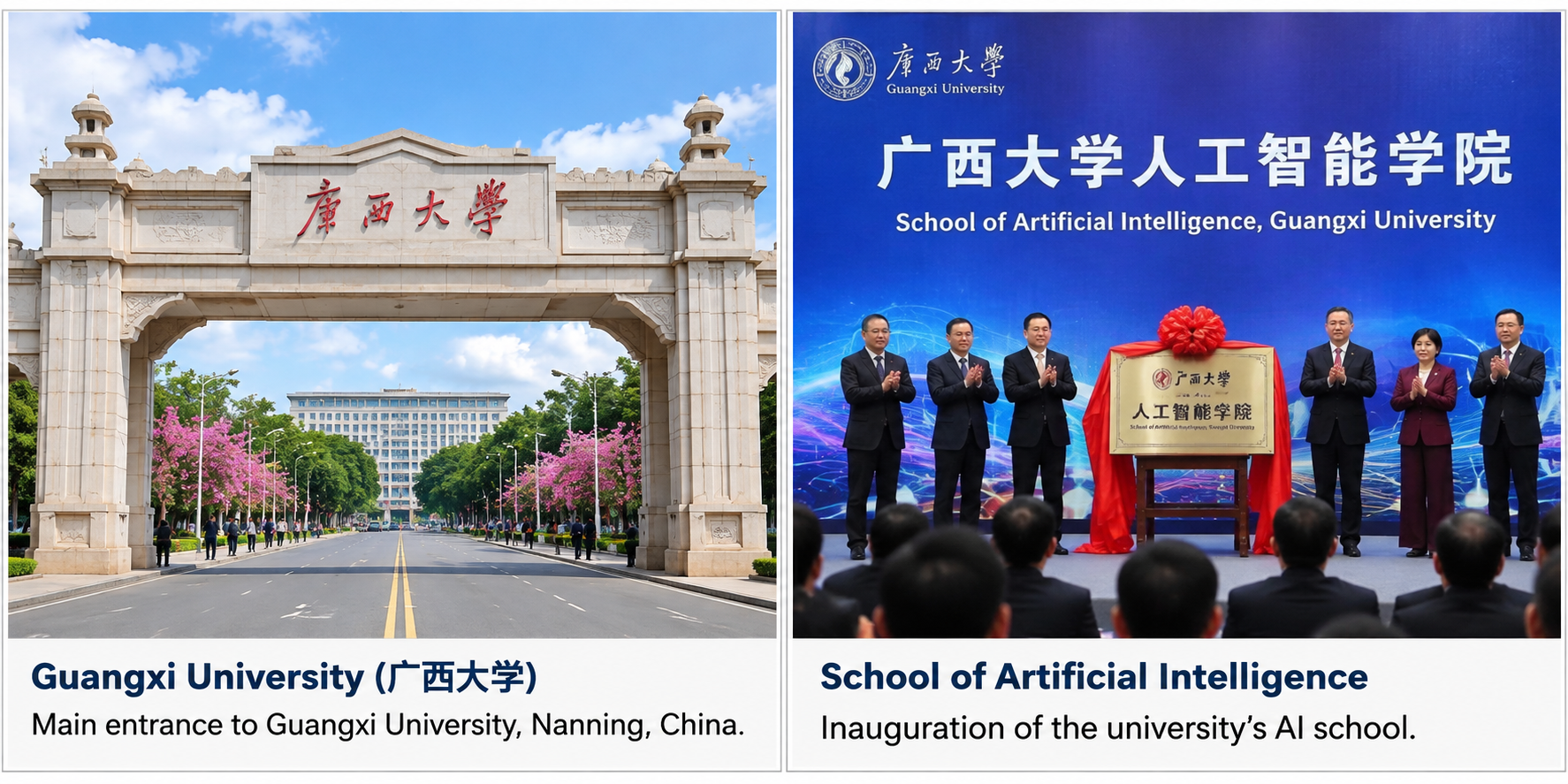
One of the clearest clues to what Nanning hopes to become is a university course with an unusual combination of subjects: artificial intelligence and Vietnamese or Thai. Guangxi University launched it in July 2026, bringing computing lecturers and foreign-language specialists into a six-week summer programme. The recruitment notice planned places for about 200 postgraduates, covering practical AI skills, language and knowledge of the countries themselves. [19]
Here, the regional policy acquires a human dimension. The person adapting a system for a Vietnamese business must be able to understand what its staff are asking for. A brilliant answer to the wrong question is of little use. Six weeks will not turn a beginner into a fluent interpreter or an advanced AI researcher, and planned places are not confirmed graduates. But the pairing of disciplines explains the intended job better than a page of official terminology.
Guangxi University established its Artificial Intelligence College in February 2025, drawing on its existing College of Computer and Electronic Information and expertise across other disciplines. Its stated objectives combine research, interdisciplinary education, commercialisation and China–ASEAN exchange. The new four-year AI degree covers machine learning, neural networks, computer vision, natural-language processing, robotics, intelligent agents and ethics. As a programme introduced in 2025, it is an investment in future graduates rather than an already mature source of trained labour. [20]
The work spreads well beyond the computing department. Alongside the Foreign Languages College’s Vietnamese and Thai teaching, the Electrical Engineering College lists a China–Malaysia AI energy-equipment laboratory. The Animal Science and Technology College has a China–Vietnam laboratory for digital and intelligent pig farming. Electricity networks and livestock may seem far removed from the glamour surrounding AI, but they offer concrete problems and potential customers. [19][21]
The university’s September 2026 account of the laboratories describes work on intelligent electrical equipment, monitoring, safety and disaster prevention. Demonstrations included drones and robots for inspecting or working on power infrastructure. The pig-farming laboratory combines sensors and data with breeding, nutrition, disease control and environmental management. Both were selected for Guangxi’s first batch of AI open-innovation platforms. [22]
An inspection robot needs to identify a fault; a farming system needs to help its operator make a better decision. Those are useful standards against which to judge the research. The university’s demonstrations show work under way, but its account does not independently establish customers’ savings or commercial returns.
Other disciplines are contributing to the less visible work of localisation. The university’s Chinese Language and Literature College has reported database development concerning ASEAN learners of Chinese, while its China–ASEAN Research Institute has commissioned research on Vietnamese AI development, governance and international cooperation. The latter matters because entering a market requires understanding its institutions as well as translating its language. [23]
Teaching machines the neighbours’ languages
Nanning cannot supply every skill from one campus. Elsewhere in the region, Guilin University of Electronic Technology has a longer record of specialist AI teaching: its AI college dates to 2018, offers degrees in artificial intelligence, data science and robotics, and records its first undergraduate graduates in 2023. [24]
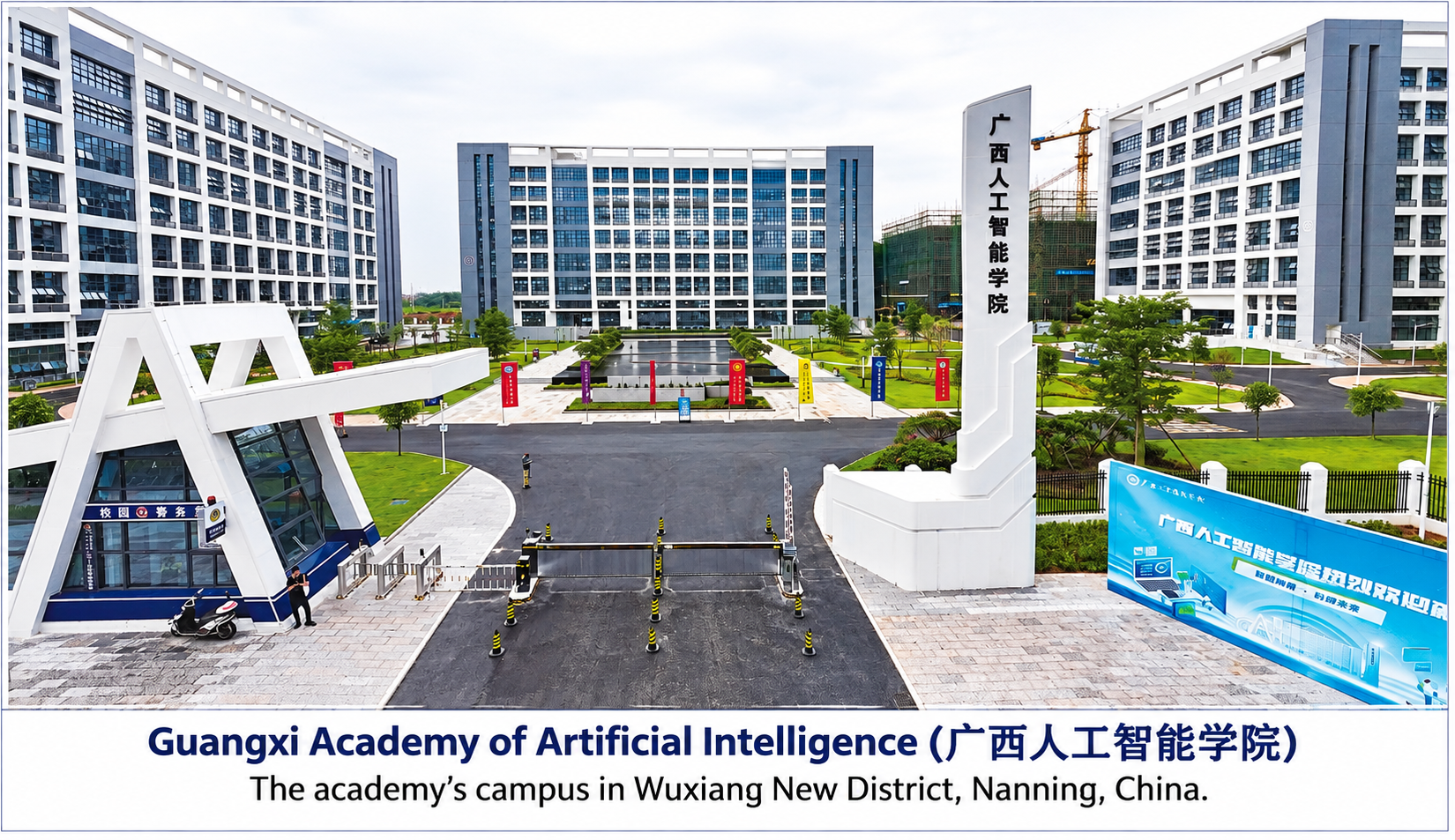
That university also leads the newer collaborative Guangxi AI College, developed with the Hong Kong University of Science and Technology and HKUST (Guangzhou). The institution is separate from Guangxi University’s AI College in Nanning. Its announced research directions include robotics and embodied intelligence, integrated circuits, agricultural applications, environmental monitoring and languages and trade relevant to ASEAN. [25]
Guilin’s involvement has a direct Nanning connection. In March 2026, the university and Guangxi Data Group signed a cooperation agreement and inaugurated a joint AI research institute at Guangxi AI College. The stated purpose is to connect research and training with digital infrastructure, industry applications and commercialisation. The agreement establishes a mechanism for collaboration; the resulting products and contracts will determine its value. [26]
At Guangxi Minzu University, the raw material is language. Researchers report collections of text, speech and material combining different media in Vietnamese, Thai, Burmese and Lao, alongside Zhuang and Yao. Their work includes translation and speech synthesis. For a speaker whose language is poorly represented in a model’s training, the quality of these resources can determine whether AI is helpful at all. Guangxi’s linguistic diversity becomes relevant here in a very practical way. [27]
In September 2026, a university laboratory report recorded the release of an association standard for annotating ASEAN language data. Guangxi University worked with Guangxi Minzu University and participating universities and companies from Vietnam, Cambodia and Malaysia on requirements covering text, speech and multimodal material. It is a shared technical initiative, rather than a binding ASEAN-wide regulatory standard. [28]
Guangxi Medical University adds a healthcare strand. Its website reports AI medical projects and pilot promotion of a traditional Chinese medicine assessment device in Malaysia and Thailand. Such pilots widen the range of applications under development, but their clinical effectiveness and commercial scale need separate assessment. [29]
This network gives the ambition intellectual substance. It brings together people who understand machines, languages and particular industries. Keeping them is another matter. Guangxi needs enough attractive work for graduates to build careers locally; otherwise, its classrooms could supply the talent for someone else’s technology cluster.
Who pays for the experiment?
For a young company, the immediate questions are less expansive: who pays the rent, and how long will the money last? Guangxi’s government is offering help with the expensive passage from research to a product. Its regional “AI + Manufacturing” measures offer eligible intelligent-product projects up to 25 per cent of qualifying investment, normally capped at RMB5 million, rising to RMB10 million for selected leading projects. Industrial AI software and benchmark industrial applications can attract up to RMB5 million; qualifying industrial datasets, up to RMB3 million. The measures run to the end of 2027. Each figure is a conditional ceiling, rather than a cheque waiting for every applicant. [30]
Nanning’s municipal package separately offers qualifying centre occupants free office space, startup support and help with research costs. It provides computing and purchased-corpus support at 30 per cent of eligible expenditure, with annual limits of RMB2 million per recipient in each category. The announced programme ceilings are RMB50 million annually for computing vouchers and another RMB50 million for corpus vouchers. [31]
The intended destination is written into the subsidy rules. Qualifying resident enterprises deploying applications in ASEAN can receive assessed support of up to 20 per cent of actual investment, capped at RMB3 million. Public money is being used to encourage firms to take the next step across the border. [31]
There is evidence of administration beyond the original announcement: applications for reimbursement of eligible 2025 computing expenditure opened in January 2026. They required actual expenditure with recognised suppliers and excluded ordinary storage and networking services. That demonstrates an application process, but does not establish how much money was ultimately disbursed. [32]
Such assistance can buy a company time to improve its product and find customers. It can also make early demand difficult to interpret. A subsidised first installation is useful experience; a customer willing to pay for the next one is stronger evidence of a business.
After the signing ceremony
There are signs that people, as well as plans, are filling the premises. A listing on Baidu’s cloud ecosystem platform describes the Nan-A ASEAN Valley park as accommodating 171 enterprises and more than 1,600 people at work, including 45 enterprises signed with the Nan-A centre. Their businesses include geospatial services, drones and data production. [7]
That suggests an occupied business environment. But the listing is promotional, has no clear measurement date and supplies no audited account of employment or revenue. Its full enterprise count cannot simply be relabelled as AI companies.
The export story requires the same care with labels.
An October release from the cooperation centre reported nearly 100 preliminary AI cooperation agreements worth around RMB2 billion during the China–ASEAN Expo. It separately reported more than RMB28 million in transactions at an AI marketplace. Proposed cooperation and reported transactions measure different things; neither establishes a dependable stream of export earnings. [8]
The release also said ArcherMind’s intelligent robots had reached markets including Laos, Myanmar and Vietnam and were being used in schools. That raises more interesting questions than the headline value of agreements: which schools, doing what, and with what results? The account gives too little detail about customers, contracts and repeat purchases to establish commercial scale.
These claims circulated internationally, including through Bernama’s media-distribution service. Their stated source remained the cooperation centre. Overseas publication should not be mistaken for independent customer confirmation. [8]
The old question of making a living
Alongside the talk of algorithms, Guangxi is investing in the much older business of moving cargo. The Pinglu Canal adds a physical route to a strategy so often described in the vocabulary of the digital economy.
Guangxi’s waterway authority designated a year of trial navigation beginning on 16 September 2026 for the 134.2-kilometre route, designed to accommodate 5,000-tonne vessels. Subsequent reporting records its September opening. [9]
Better freight connections could support the broader economy in which technology businesses operate. Trading companies, logistics providers and manufacturers are potential buyers of software and data services. That is a plausible connection between the canal and the digital strategy, rather than a demonstrated financial return from combining them.
The demanding work still happens at the customer’s end. Who fixes the software after installation? Who explains a mistake? Where does the data go, and who controls it? Nanning’s firms will need engineers and language specialists able to answer those questions. Southeast Asian buyers have their own priorities, competitors to consider and reasons to be cautious. They are customers with choices, not simply the destination on a Chinese planning map.
For Nanning, this is a serious attempt to find a specialism suited to its circumstances. The universities, computing facilities and public investment give it substance. They do not yet establish an international AI success.
The city’s old trading streets offer a modest reminder of what remains. Renovation can bring people through the door, just as political backing can bring a company to a new technology park. Making a living requires them to return. Nanning’s AI ambition will become convincing when its neighbours come back with repeat orders.
Sources
-
Chen Gang, signed Xinhua article, 8 March 2026: https://www.xinhuanet.com/politics/20260308/90c9788391f3461fb8086684a13a1909/c.html
-
Nanning 2025 statistical communiqué, reproduced from Nanning Publishing: https://finance.sina.cn/2026-05-22/detail-inhyumqm7667712.d.html
-
Municipal media report of Guangxi January–September 2026 statistics: https://www.gxnews.com.cn/staticpages/20261025/newgx6adde429-22008098.shtml
-
Official account of Xi’s December 2023 Guangxi visit: https://www.cac.gov.cn/2023-12/15/c_1704305103922693.htm
-
NDRC ministerial roundtable announcement, 18 September 2025: https://www.ndrc.gov.cn/fzggw/wld/wcl/zyhd/202509/t20250918_1400573.html
-
August 2026 Nanning briefing, China News Service report reproduced by MOFCOM: https://dzswgf.mofcom.gov.cn/news/183/2026/8/1787191434684.html
-
Baidu cloud ecosystem park listing: https://opc.baidu.com/park-detail/nanning-nan-a-dongmengu-opc
-
Cooperation centre press release, 27 October 2026: https://mrem.bernama.com/viewsm.php?idm=55743
-
Guangxi waterway authority trial-navigation notice: https://www.gxghj.cn/h5/news-348818247744749568?pid=xw ; subsequent Bernama report: https://www.bernama.com/en/news.php?id=2626470
-
Nanning, Encyclopedia of China entry, Berkshire Publishing:
Nanning
; city history: https://en.chinanetz.info/provinces/guangxi/nanning -
Guangxi local chronicles office, regional history: https://byte.gxnews.com.cn/www.gxzf.gov.cn/mlgxi/gxrw/lsyg_29590/t20880492.shtml ; regional People’s Congress history: https://www.gxrd.gov.cn/html/art138335.html
-
People’s Daily report of Guangxi’s 2020 census briefing: https://gx.people.com.cn/n2/2021/0513/c179430-34723914.html
-
Guangxi government ethnic groups overview: https://byte.gxnews.com.cn/www.gxzf.gov.cn/mlgxi/gxrw/ftrq/t20895691.shtml ; National Library account of Sanyuesan: https://www.nlc.cn/pcab/zx/xw/20200416_191124.shtml ; national intangible heritage register on bronze drums: https://www.ihchina.cn/project_details/15040/
-
University of Pennsylvania Language Log, Zhuang linguistic relationships:
A hidden minority revealed
-
Guangxi local-history study of China–Vietnam trade routes: https://www.gxzx.gov.cn/index.php?a=show&c=index&catid=115&id=24161&m=content
-
Xiong Zhaoming, Hepu archaeology, Antiquity: https://www.cambridge.org/core/journals/antiquity/article/abs/hepu-han-tombs-and-the-maritime-silk-road-of-the-han-dynasty/E25B5D92D22A110D3CFB5AD74F89F38A
-
The China Seas in world history: https://doi.org/10.1016/J.IMIC.2012.11.002
-
Yu Shi-jie, mountain trading routes (2016): https://xb.szu.edu.cn/article/2016/1000-260X-33-5-134.html ; Yunnan trade before Mengzi’s opening: https://www.pishu.com.cn/skwx_ps/initDatabaseDetail?contentId=8407722&contentType=literature&siteId=14
-
Guangxi University postgraduate training notice and launch report: https://yjsc.gxu.edu.cn/info/1013/4633.htm ; https://www.gxu.edu.cn/info/1004/41391.htm
-
Guangxi University AI college establishment and degree curriculum: https://news.gxu.edu.cn/info/1002/42474.htm ; https://www.gxu.edu.cn/info/1004/37691.htm ; https://zs.gxu.edu.cn/info/1217/1177.htm
-
Guangxi University electrical engineering and animal science platform descriptions: https://dqgc.gxu.edu.cn/info/1189/4629.htm ; https://dky.gxu.edu.cn/info/1311/4399.htm
-
Guangxi University joint laboratories, September 2026: https://news.gxu.edu.cn/info/1002/44171.htm
-
ASEAN Chinese-learning database and Vietnamese AI research: https://news.gxu.edu.cn/info/1002/44167.htm ; https://zgdmyjycfy.gxu.edu.cn/info/1441/4182.htm
-
Guilin University of Electronic Technology AI college profile: https://www.guet.edu.cn/zs/2125/list.htm
-
Collaborative Guangxi AI College, People’s Daily Overseas Edition: https://gx.people.com.cn/n2/2025/0906/c179435-41343685.html
-
Guilin university and Guangxi Data Group research institute: https://www.guet.edu.cn/nyy/2026/0323/c6487a150003/page.htm
-
Guangxi Minzu University language resources: https://tzb.gxmzu.edu.cn/info/1006/2133.htm
-
ASEAN language-data annotation association standard: https://sacl.gxmzu.edu.cn/info/1012/4431.htm
-
Guangxi Medical University report on AI applications and pilots: https://www.gxmu.edu.cn/news/mtbd/t228641.html
-
Regional AI manufacturing incentives, corroborating Chinese reports of the jointly issued policy: https://gx.people.com.cn/n2/2025/0913/c179430-41350511.html ; https://news.gxtv.cn/article/detail_c106d24d3ad44f78afec1927a7c205f9.html
-
Nanning’s April 2025 policy package, press-conference account and text: https://gxxwfb.gxnews.com.cn/article.v2019.php?id=21782168
-
January 2026 application window for 2025 computing reimbursements: https://gx.people.com.cn/n2/2026/0108/c179430-41466797.html
-
Chen Gang’s scientific education and career: https://politics.people.com.cn/n/2014/0618/c351134-25167766.html ; December 2024 Guangxi appointment: https://politics.people.com.cn/n1/2024/1231/c1001-40393093.html
-
November 2026 confirmation of Chen Gang’s and Wei Tao’s roles: https://www.gxnews.com.cn/staticpages/20261110/newgx6af2ea6c-22013957.shtml ; Party committee responsibilities: https://www.spp.gov.cn/dj/c100027/201711/t20171109_320775.shtml
-
Guangxi Daily report on Zhongshan Road’s reopening, 16 February 2026, reproduced by People’s Daily: https://gx.people.com.cn/n2/2026/0216/c179430-41504552.html
-
Historical study of Guangxi–Vietnam wildlife trade, 1993–1996: https://www.researchgate.net/publication/226903379_The_Dynamics_of_Trade_in_Live_Wildlife_across_the_Guangxi_Border_between_China_and_Vietnam_during_1993-1996_and_its_Control_Strategies ; Xinhua report on Nanning restaurant closures and menu changes, 2 April 2020: https://www.xinhuanet.com/english/2020-04/02/c_138940657.htm
-
Nanguo Zaobao report on the restored Three Streets and Two Alleys quarter, 1 March 2025: https://www.ngzb.com.cn/news/2025/03/01/nanning-sanjie-liangxiang-jiexiang-bianshen-wenlv-ronghe-xindi.html