Trump’s Gulf troop build-up risks turning into a killing field for US forces
by Jaffa Levy
·
The force moving into the Gulf is not an invasion army for Iran. It is a rapid reaction, amphibious and airborne package built for seizure, raid and coercion. But that is precisely the problem. If Washington now tries to turn Kharg Island or the islands around Hormuz into a dramatic war ending gesture, it will not be launching a neat limited operation. It will be sending light troops into a prepared coastal kill zone where the hard part is not landing, but surviving.
The decisive fact in this war is no longer how many targets Washington says it has hit. The decisive fact is whether the United States can force open the Strait of Hormuz and restore the old Gulf order at a cost that is militarily, politically and economically bearable. On the evidence of the forces now being moved, the answer looks like no. What is being assembled is not a conquest force for mainland Iran. It is a narrower package: paratroops from the 82nd Airborne, Marines carried on amphibious ships, and supporting forces built for rapid entry, short violent action and tactical seizure. That may be enough to grab a point on the map. It is not enough by itself to resolve the war that produced the need to grab it.
The failed first strategy
The first point to understand is that the island option is not the beginning of the strategy. It is what comes after the first strategy failed. The opening theory of this war appears to have been simple: kill senior leadership, create disorientation, trigger internal fracture, and let military pressure turn into political collapse. That did not happen. Iran did not fall like a house of cards. The command structure did not evaporate. The state did not disintegrate. Once that premise failed, Washington and Israel were left looking for a second stage. That is where Kharg, Qeshm, Larak, Abu Musa, Greater Tunb and Lesser Tunb enter the story. The turn toward islands is not proof of confidence. It is proof that the original theory of victory has been abandoned.
The island option is not the opening move of a confident strategy. It is the improvised sequel to one that failed.
What sort of force is actually moving
The 82nd Airborne tells you what sort of plan is now being considered. The division exists for speed, shock, and entry, not for prolonged island siege warfare. It is light infantry. It can move fast, seize an airfield, reinforce a lodgement, and get boots on the ground before an opponent is fully ready. What it does not bring with it is the heavy architecture of endurance: deep ammunition reserves, heavy armour, sustained artillery support, large logistics trains, and the ability to sit for weeks under missile and drone fire while waiting for relief. That matters because if the 82nd is used against Qeshm or Larak, the achievement will be the landing itself. Everything after that becomes progressively worse.
The Marines matter in the same way. A Marine Expeditionary Unit is designed for mobility and tactical violence. It can raid, seize, evacuate, reinforce and hit coastal targets. Amphibious ships like USS Tripoli are sea bases for getting that force to the point of action. But that only works cleanly in a permissive or semi permissive environment. The Gulf near Iran is not permissive. It is a narrow, watched, missile saturated littoral battlespace. So the Marines do not arrive in a blank space. They arrive in a geography that has been prepared against them for decades.
The geography is the trap
And that geography is the real story. This is where Crooke’s argument matters. The islands near Hormuz are not isolated stepping stones sitting harmlessly at sea. Qeshm and Larak lie under the shadow of the Iranian coast. Behind that coast are barren mountains, cliffs, caves, tunnels, fire positions and concealed launch areas. Those islands are within easy artillery and fire control range from the mainland. They are also exposed to drones, coastal missiles, small boat attacks, mini submarines and mining. That means any American force landing there would not be arriving on a neutral patch of ground. It would be entering a coastal bowl already dominated by Iranian geography and pre planned Iranian fires.
Qeshm, Larak and the nearby islands are not neutral staging grounds. They sit under the fire control and terrain shadow of the Iranian coast.
How the assault would actually begin
That brings us to the first operational problem: how do the troops actually get there?
This is where television talk about “taking the island” becomes childish. If amphibious ships cannot safely close to the coast because of anti ship missiles, mines, drones, mini subs and coastal attack craft, then the Marines cannot simply steam in, open ramps and go ashore as if this were an old exercise. The ships would have to remain farther out. Once that happens, the assault shifts from a classic amphibious entry to helicopter, tiltrotor or over the horizon insertion.
That is where the second trap begins.
If troops are inserted by Osprey, Chinook, Black Hawk or other helicopter lift, they are no longer protected by the ship. They are moving through the very altitude bands and approach corridors a prepared defender will try hardest to contest. Crooke’s point from Afghanistan is directly relevant here: even far less sophisticated defenders with mountains nearby and shoulder fired missiles could make helicopter operations dangerous. Iran is not Afghanistan. It has better missiles, better drones, better coastal preparation, and far greater depth. The route onto the island is therefore not a technical detail. It is part of the kill chain.
The route onto the island is itself part of the disaster.
The assault sequence in practical terms
So imagine the operation in sequence.
First, ships stay farther from shore than planners would like because the coast is too dangerous.
Second, Marines or paratroops are loaded into aircraft for insertion.
Third, those aircraft must fly long enough and low enough to be exposed to radar cueing, infrared signatures, small arms, MANPADS, and short range air defence.
Fourth, even if they make it in, they land without the comfort of a secure deep rear area.
Fifth, the minute the lodgement is identified, Iranian fires begin to range in.
This is why the operation is much closer to a trap than a solution.
Why Kharg seduces and then kills the plan
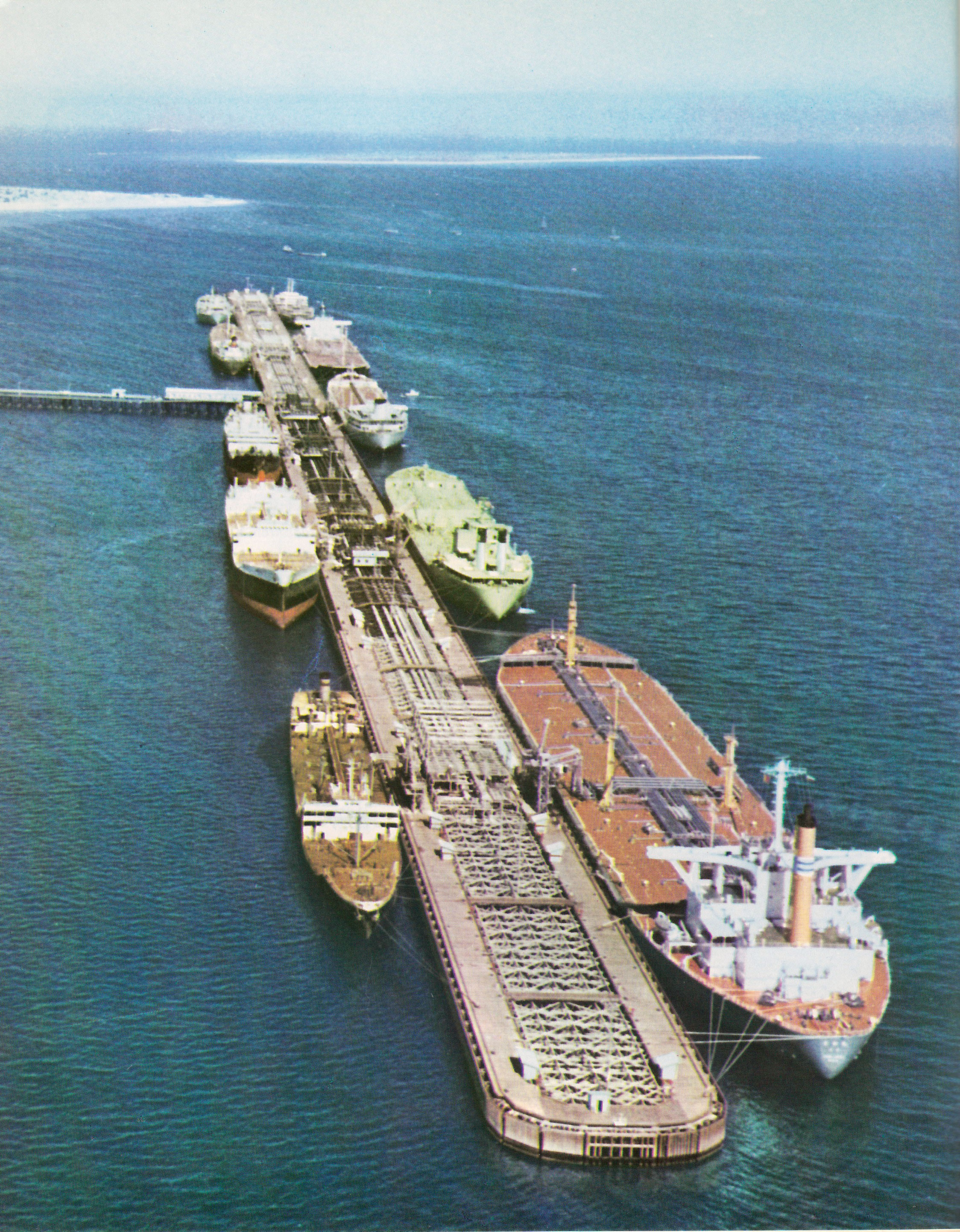
Now take Kharg itself. The seductive case for Kharg is obvious. It is a visible economic target. It has long handled the bulk of Iranian oil exports. It can be described on television in a sentence. “Take Kharg, cripple Iranian oil, force concessions.” That is exactly why it appeals to slogan thinkers. But operationally Kharg is one of the worst ideas on the board.
First, Kharg is far north in the Gulf. Taking it does not secure the Strait of Hormuz. That is the first illusion.
Second, Kharg is flat, exposed and has little natural cover. That is the second illusion. Troops sitting there do not gain a fortress. They gain exposure.
Third, even if American forces land successfully, they cannot export the oil themselves. Iran can shut the pipelines from the mainland. So the idea that Kharg becomes a neat American bargaining chip is much less tidy in practice than on paper.
Fourth, once American troops are on Kharg, Iran does not need to retake the island in a dramatic amphibious counter assault. It only needs to make the island uninhabitable for the force sitting there. That can be done with missiles, drones, artillery like fires, mining of approaches, saturation strikes on resupply, and sustained pressure on any aircraft trying to move people or materiel.
Kharg does not reopen Hormuz. It simply gives Iran a fixed American target to saturate.
What happens after the landing
So what happens after the landing?
The minute the Marines or paratroops are on Kharg, the island becomes a fixed target. Ammunition starts running down. Food starts running down. Water becomes critical. Casualties begin. Medical evacuation becomes essential. But every helicopter sent in to evacuate wounded must fly the same dangerous corridor. Every ship sent in with resupply becomes another target. Every attempt to reinforce the island increases the logistical burden. So the island becomes not a lever on Iran, but a hostage to Iranian fires.
That same logic applies, with local variation, to Qeshm, Larak and the other islands near Hormuz.
Qeshm is larger, but that does not make the problem better. It makes the resupply requirement larger.
Larak is tiny, which makes concealment worse.
Abu Musa and the Tunbs sit inside a politically explosive zone because the UAE claims them, which means any American move there risks not just a military exchange with Iran but a direct escalation with Gulf state infrastructure in the firing line.
And Tehran has already signalled the response logic very clearly. If these islands are used as staging areas for attack, or if a Gulf state openly assists in their seizure, Iran can respond by:
mining the strait more comprehensively,
striking Gulf infrastructure,
hitting desalination plants and power plants,
widening the war to the host state itself.
That is why even a tactical “success” on the islands may worsen the strategic balance.
Because what follows is not “mission accomplished.” What follows is:
Hormuz rendered more dangerous, not less,
Gulf infrastructure more exposed, not less,
Western supply chains more disrupted, not less,
American troops sitting in exposed lodgements,
and Washington forced either to escalate much further or to withdraw under pressure.
The central military truth
This is the core military truth the article must now state openly:
A light force can seize a point. It cannot automatically hold that point against a prepared state that owns the coast behind it.
And the coast behind it matters. Iran is not improvising this. Its defensive concept has been built around exactly this contingency. The picture that emerges from the inputs you provided is consistent: underground storage, dispersed command, missile cities, protected infrastructure, coastal tunnels, naval assets hidden and then released, mini subs, submersible drones, fast boats, shoulder fired systems, phased air defence, and a long war logic rather than a short war logic. That means an American landing is not entering confusion. It is entering preparation.
Why intelligence does not save the plan
There is another operational detail that must be made explicit: intelligence does not rescue a bad mission design.
Even if the Americans have excellent imagery, infrared signatures, signals intercepts and overhead surveillance, that does not mean they know enough to make the island assault viable. They may know where some forces are. They may not know where all underground dispositions are. They may know some launch areas. They may still miss deception, decoys, mobile launchers, reserve forces, and local prepared positions. And even perfect intelligence would not alter the central fact: once a light force is isolated on an island under missile and drone pressure, knowledge is not a substitute for logistics.
The ugliest question: how do you get them out?
That leads to the next practical question, and it is the ugliest one: how do you get them out if it goes wrong?
This is the question that fantasy planning avoids.
If the lodgement is under sustained fire, if helicopters are being shot at, if ships cannot safely approach, if the wounded are piling up, if ammunition is thinning, if the weather changes, if air defence on the mainland remains active, if Gulf infrastructure is itself being hit, then extraction becomes as dangerous as insertion.
So the whole mission is structurally warped. The United States would be risking elite light forces not for a decisive operational objective, but for a tactical gesture that may have to be reversed under exactly the conditions that made it foolish in the first place.
Short war thinking versus long war thinking
And all of this rests on a deeper mistake which Crooke makes especially well: Washington is still thinking in the grammar of short war, shock, and visible action. Iran is thinking in the grammar of long war, endurance, staged escalation and controlled attrition. The West’s instinct is to hit hard and expect politics to follow. Iran’s answer is to keep the war alive long enough that the political, economic and military contradictions of the Western strategy begin to eat it from within.
That is why the missile issue matters too. The shallow narrative says: perhaps Iran is running short. The more serious reading is different. Iran appears to be metering capability, not emptying itself blindly. Newer systems appear later. Bigger warheads appear later. Different effects appear later. That suggests not panic but sequencing. If that is right, then Washington is not facing an opponent who has already shown its full hand. It is facing one that is still choosing how much to reveal and when.
Washington wants a short political cycle. Iran is deliberately stretching time.
The economic damage is larger than oil
This is also why the economy matters, but not in the crude sense of oil price headlines alone. A prolonged Hormuz crisis does not just mean more expensive energy. It means disruptions to the ugly, obscure industrial feedstocks that modern economies need quietly every day: chemicals, gases, processing inputs, manufacturing materials, shipping chains, insurance chains, and supply timing. Once that disruption runs for weeks, it does not remain a “market event.” It becomes a structural economic problem. So an island seizure that fails to reopen normal maritime passage quickly may actually deepen the strategic damage it was supposed to cure.
Why the temptation remains
That is the point at which the political and military arguments converge.
Trump may still want an offramp. But if he wants an offramp that leaves him looking like a winner, then the temptation is obvious: do something visible, something dramatic, something that can be packaged as bold leadership. That is exactly why the island option is so dangerous. It is militarily dubious and politically tempting. Those are often the most lethal combinations in war.
Final judgment
The proper judgment, after all the evidence you have supplied, is therefore harsher and more precise than before:
Boots on the ground on Kharg or on the islands around Hormuz would not represent the controlled application of superior force. They would represent the moment when a failed decapitation war tries to save itself by turning light expeditionary forces into instruments of symbolic leverage inside a battlespace designed to destroy exactly that sort of force.
That is the real meaning of the troops moving into the Gulf.
The 82nd Airborne is not an invasion army. The Marines are not a self sustaining island garrison. The amphibious force is not entering a permissive sea. The helicopters and Ospreys are not just transport. Kharg is not a magic switch. Qeshm and Larak are not empty staging posts. And Hormuz is not solved because a few flags go up on a few islands.
If Washington puts boots on the ground there, the hard part does not begin after victory. The hard part begins the moment the first boots touch the island.