Ali Larijani’s Reported Death Shows How Modern War Is Fought Through Competing Claims of Reality
Latest update (18 March 2026): Ali Larijani
Ali Larijani has now been confirmed dead. Iranian state authorities, including the Supreme National Security Council, have acknowledged his killing, describing him as a martyr following Israeli airstrikes carried out on the night of 16 to 17 March. This aligns with earlier Israeli statements that he was specifically targeted in those strikes.
Independent international reporting now broadly supports this conclusion, and earlier uncertainty appears to have reflected delayed official confirmation rather than conflicting facts.
What remains unclear are the precise operational details of the strike, the intelligence used to locate him, and the full extent of casualties within Iran’s senior leadership structure.
The claim that Ali Larijani has been killed is still not a settled fact. Israel says one of Iran’s most senior security figures was assassinated in an overnight strike on Tehran. Iran has not confirmed it. That gap between claim and proof is the real story, because modern war is now fought not only through missiles and airstrikes, but through competing versions of reality pushed into the information space before evidence catches up.

Ali Larijani in a 2025 interview portrait. Source: Wikimedia Commons.
Ali Larijani is not a minor official. He has been one of the most important figures in the Iranian state for years, serving as speaker of parliament from 2008 to 2020 and later returning to the centre of Iran’s wartime command structure as secretary of the Supreme National Security Council. He has also been a former nuclear negotiator, a regime insider, and a political operator who sits at the intersection of security, strategy, and internal power. If he has in fact been removed, that would not be a symbolic strike. It would be a serious blow against the command layer of the Iranian state.
That is why the claim matters. But it is also why the evidential standard has to be high. At present, the public case for Larijani’s death rests overwhelmingly on Israeli official statements and the rapid amplification that followed. That gives the claim political weight, but it does not yet amount to independent confirmation. There is no neutral forensic evidence in the open. There is no body confirmation. There is no third party intelligence validation available publicly. Iran, crucially, has not announced his death.
That silence matters, but it should not be overstated. States delay announcements for many reasons. They may be trying to stabilise a command structure, manage succession, avoid panic, or simply buy time while facts are established. Still, in this conflict Tehran has shown that it can confirm the deaths of senior figures quickly when it chooses to. The absence of such confirmation here is therefore negative evidence. It does not prove Larijani is alive, but it weakens the certainty of the Israeli claim.
There are also signs of continued activity associated with him. Reports of posting from his verified account and the general handling of the story by Iranian media suggest continuity rather than martyrdom. Again, that is not conclusive. An account can be operated by staff, and states can manufacture proof of life if they need to. But when weighed together with the lack of confirmation, those signals point away from any clean conclusion that his death has already been established.
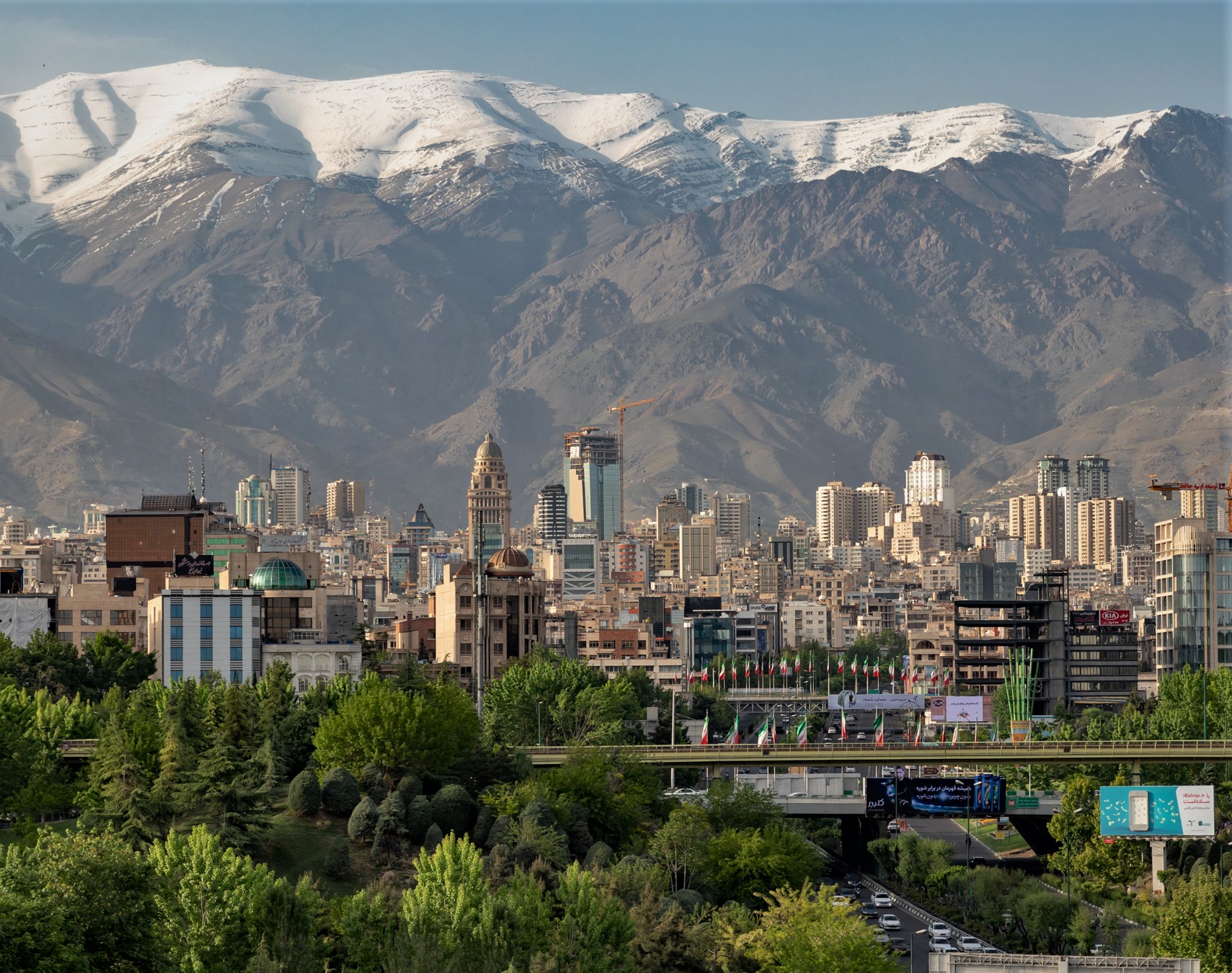
North Tehran skyline with the Alborz mountains in the background. Source: Wikimedia Commons.
What this episode reveals is something wider than the fate of one man. It shows how modern conflict operates through structured ambiguity. Israel has every incentive to project that it can penetrate the highest levels of Iran’s leadership and kill at will. Even an unverified claim serves that purpose by signalling reach, intelligence superiority, and psychological pressure. Iran, by contrast, has every incentive to project continuity, resilience, and control. It does not need to win the argument outright. It only needs to stop the image of decapitation from solidifying.
That is why this should be read as a battle over command legitimacy as much as a battle over one strike. Israel is saying the Iranian state is vulnerable at the top. Iran is signalling that the state still functions. The truth may eventually prove one side right. But in the meantime the information contest is itself part of the war.
A disciplined reading therefore avoids two common mistakes. The first is to accept the Israeli claim as confirmed fact simply because it came from an official source. The second is to dismiss it entirely because Iran has not acknowledged it. Both positions go too far. A more defensible conclusion is narrower and stronger: there is no reliable independent confirmation that Ali Larijani has been killed, and current observable indicators are at least consistent with continued activity.
That leaves several possibilities open. He may have been killed, exactly as Israel claims. He may have been targeted and survived. Israel may have struck the wrong location or acted on flawed intelligence. Or the announcement may be serving a deliberate wartime signalling function while the real outcome remains unclear. In a live conflict, all four possibilities are plausible.
For now, the correct posture is scepticism without denial. Larijani’s reported death remains unverified. But the speed with which the claim spread, and the speed with which counter signals emerged, tells its own story. In contemporary war, information does not merely report events after the fact. It shapes the battlefield while the facts are still forming.
You might also like to read on Telegraph.com
War week, missile arithmetic, and battlefield escalation
- Iran’s War Strategy: Missile Attrition, Interceptor Depletion and the Hormuz Energy Shock
- Why the War With Iran May Be About Oil and the Petrodollar System
- Iranian Frigate Dena, Submarine Warfare and the Duty to Rescue
- Iran War Day 5 Full Situation Report
- Iran War Enters Day Five and Turns Into Prolonged Regional Conflict
- Could This War End With Israel Using Nuclear Weapons?
- War With Iran Shutters Strait of Hormuz and Sparks Global Crisis
- Second Decapitation Strike Locks Iran War Into Escalation
- Iran War Day Four: Missile Depletion Analysis and Endurance Advantage
- Iran War Enters Energy Markets as Oil Surges
- Missile Defence Sustainability Will Shape the Iran Conflict
- Killing of Iran’s Supreme Leader Marks Historic Escalation
- America Has Entered a War It May Not Be Able to Control
- US and Israel Launch Decapitation Strike on Iran Leadership as Missiles Hit Gulf Bases
Pre-war warning signs, deterrence, and military posture
- Iran Enrichment, US Base Retaliation Threats, and Strait of Hormuz Oil Risk Explained
- Indicators of Intent: How Converging US Military Posture Around Iran Has Made Sustained Operations Feasible
- Iran War Escalation Follows 2009 US Policy Blueprint
- War With Iran Would Not Stay Limited
- China Will Not Let Iran Fall
- Iran, War and Nuclear Ambiguity
- Middle East Security Architecture Failure Leaves Iran With Bilateral Deterrence
- The Five Day Constraint in a War With Iran
- Will Israel Strike Iran Before Winter
- Iran’s Su-35 Gamble: From MiG-29 Lifeline to a High-Value Bet on Russian Arms
Escalation as process, not event
- War With Iran Is No Longer a Decision But a Process
- US Military Buildup Around Iran Signals Leverage, Not War
- The Middle East After Sovereignty
- The Perimeter Problem: How US Power Expands Risk
Protests, blackouts, and the information battlespace
- Iran Internet Blackout and Protests
- Iran Protests and Starlink: How Internet Shutdowns Crushed Momentum
- When the Sky Went Online
- Why Iran’s Protests Dominate the News
System level implications