Listen to a Summary of This Article
Across Donetsk, Zaporizhzhia, Sumy and northern Kharkiv, Russian forces are pressing defended towns and the routes that keep them supplied. The question is whether that pressure can force Ukrainian withdrawals.
A town can become difficult to defend long before enemy troops reach its centre. Food, ammunition and replacement soldiers must get in. Wounded men must get out. When the roads become too dangerous to use, the troops holding the buildings and trenches face a different battle: how long they can remain there.
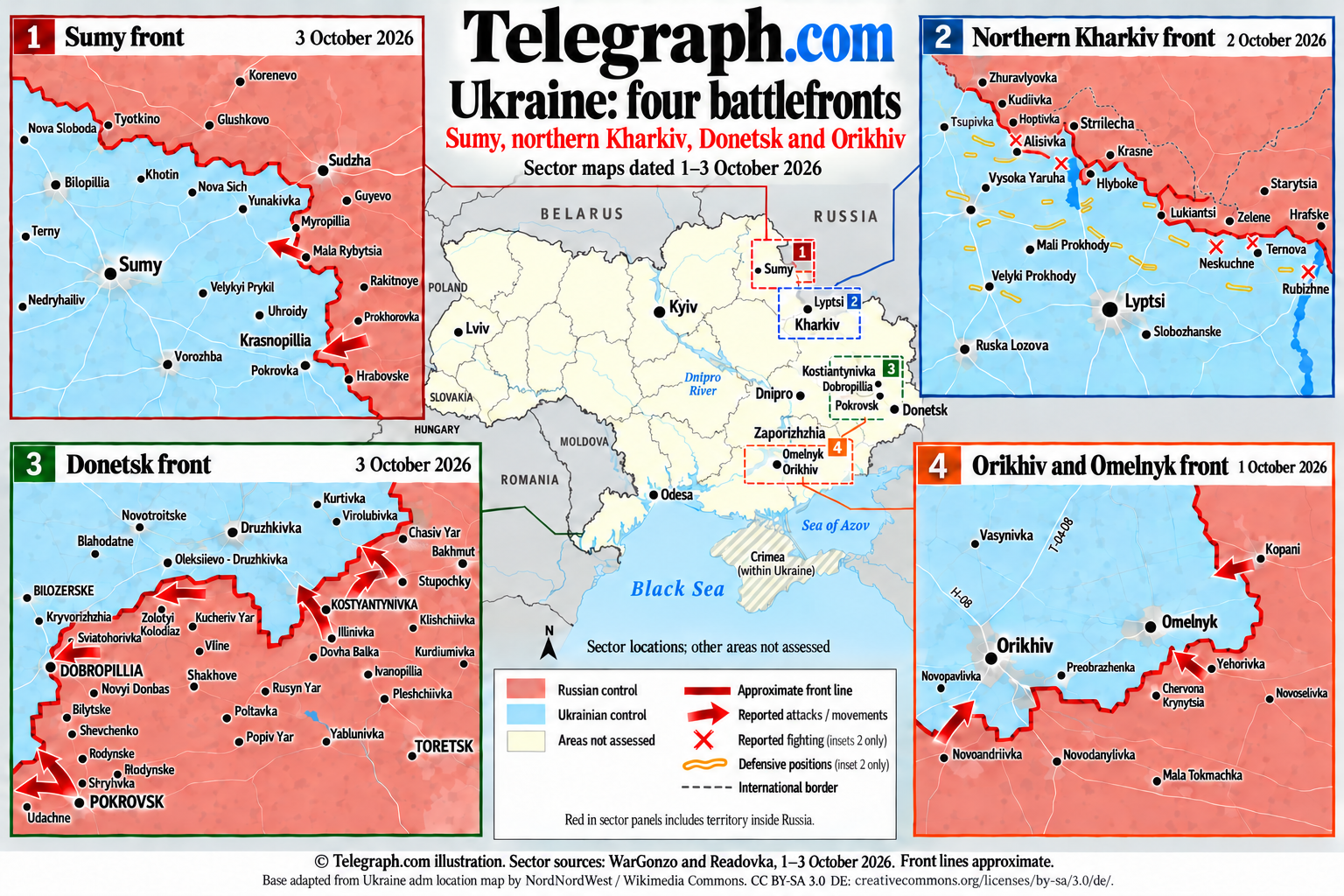
That problem runs through Russia’s campaign as of October 3. Across four fronts, its forces are attacking Ukrainian positions while trying to disrupt the connections between them. The apparent purpose is to make individual strongpoints harder to sustain and leave Ukrainian commanders facing competing demands for reinforcements.
The fighting takes different forms. In Donetsk, Russian forces are pressing towards a network of industrial towns. Around Orikhiv, urban fighting is accompanied by pressure on neighbouring settlements and roads. Along the northern border, attacks oblige Ukraine to maintain forces that might otherwise reinforce the east or south.
Russia’s progress remains uneven. Threatening a road is easier than holding it. Entering a settlement does not establish control over it. Ukraine’s counterattacks, drones and defensive positions continue to complicate the conversion of local gains into a wider advance.
Donetsk: pressure on the towns and their approaches
Dobropillya and Kostyantynivka are immediate focal points, while fighting farther north concerns the ground protecting Sloviansk and Kramatorsk.
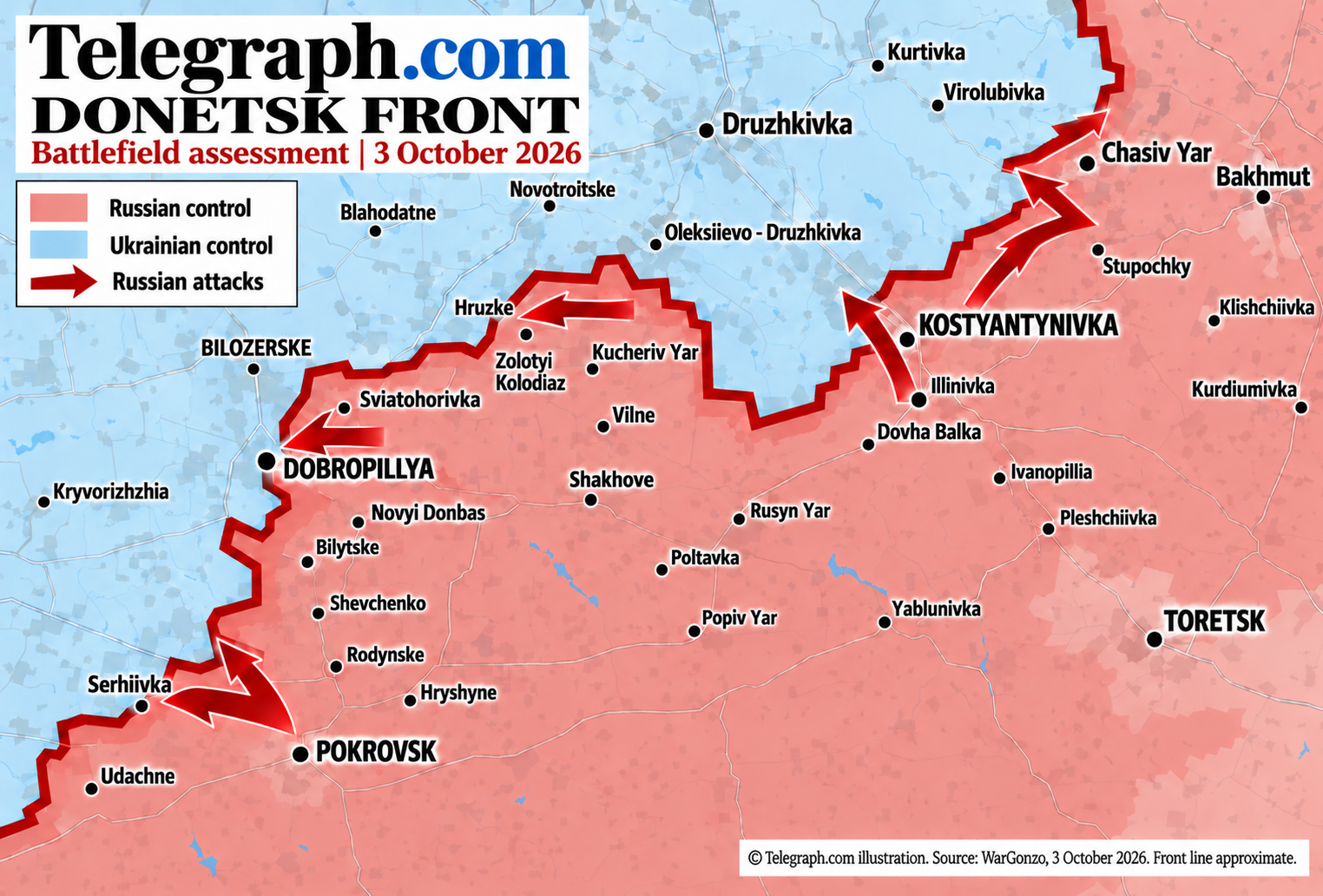
Dobropillya sits within a widening struggle over Ukraine’s remaining defensive positions in Donetsk oblast. Russian attacks from the east and west seek to narrow the space available to its defenders and threaten the approaches through which the town is supplied.
The distinction between isolation and encirclement matters here. A road can remain in Ukrainian hands while becoming increasingly dangerous to use. Reconnaissance drones watch for vehicles; attack drones strike them; artillery and mines add further hazards. Supplies may still get through, but in smaller loads, at particular times or at greater cost.
Around Dobropillya, pressure on those connections is central to the battle. A completed encirclement has not been established.
Farther northeast, Kostyantynivka and Druzhkivka belong to another cluster of towns whose defences depend partly on the surrounding settlements. Oleksiievo-Druzhkivka and Kurtivka matter because they provide positions and approaches around the larger urban centres. Losing such ground can expose another road or force defenders to cover a wider frontage.
Farther north, fighting around Mykolaivka, Kryva Luka and Rai-Oleksandrivka concerns the approaches to the Sloviansk and Kramatorsk area. Russia is seeking to bring that defensive network under closer pressure. Ukraine’s task is to hold enough of the surrounding ground to prevent the cities becoming the next immediate battlefield. The evidence reviewed does not establish Russian ground entry into either city.
The Lyman sector illustrates the difficulty of sustaining an advance. Around the Zherebets River, Ukrainian counteraction has complicated Russian operations. Dibrova and Ozerne remain part of the fighting across wooded ground and river approaches, without a clearly established new shift in the line in the latest reviewed accounts.
Woodland can conceal infantry, but it also makes positions difficult to observe and control. River approaches restrict movement. Troops who advance through this terrain still need ammunition and an evacuation route; Ukrainian attacks against their flanks can force Russia to spend men and time securing what it has gained.
The wider Russian objective in Donetsk appears to be cumulative: make successive positions less secure until Ukraine must either reinforce them heavily or withdraw to a shorter line.
Orikhiv and Zaporizhzhia: fighting for the connecting roads
Pressure on Orikhiv extends into Preobrazhenka and towards Omelnyk, where the road network helps sustain the wider defensive area.
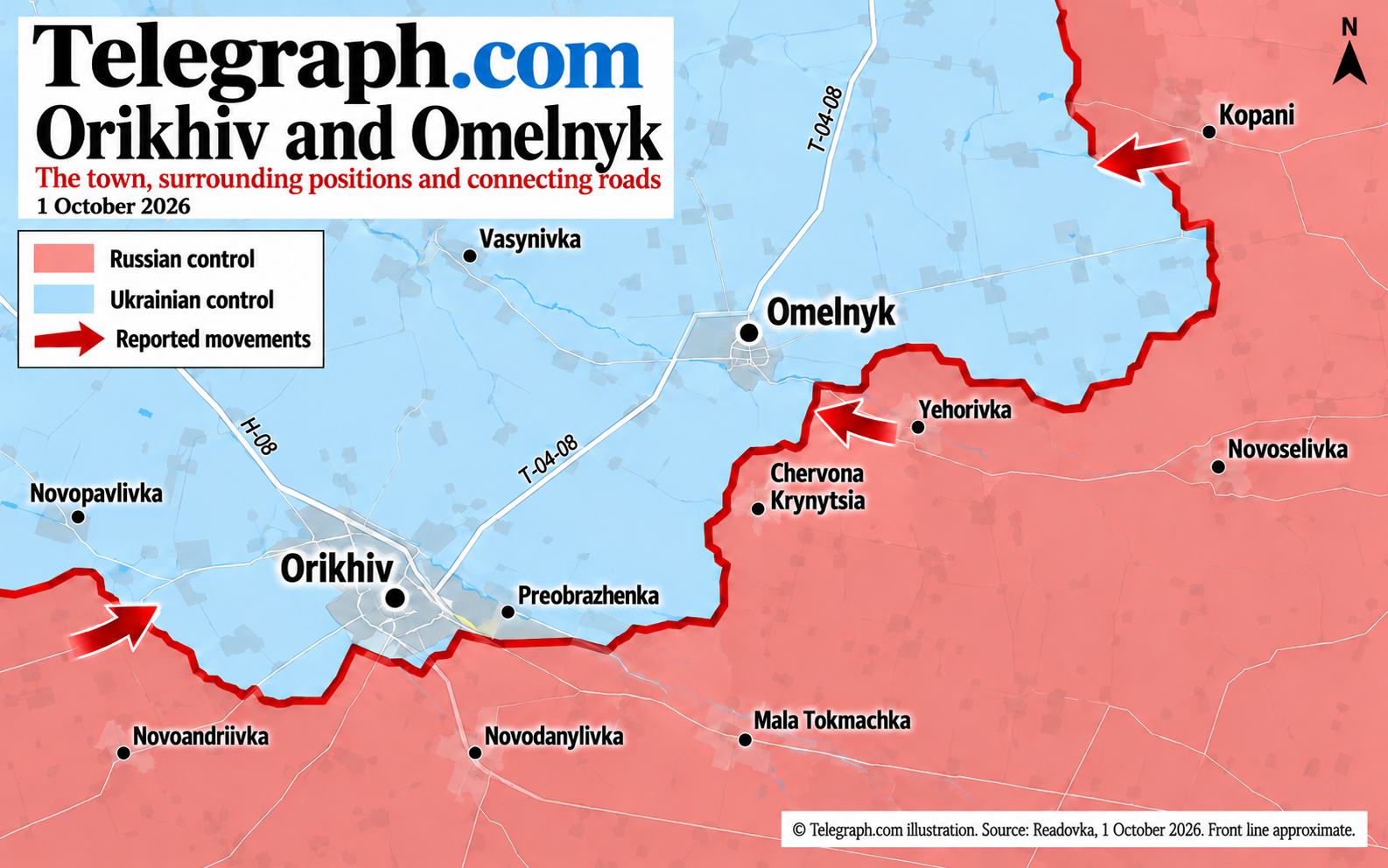
Orikhiv is under substantial pressure, with reported fighting extending into the town and the neighbouring Preobrazhenka area. Farther east and northeast, operations around Yehorivka and Omelnyk affect the connections supporting the Ukrainian position.
These places need to be read together. Orikhiv is a defended town within a larger system of settlements, roads and field positions. Its ability to hold depends partly on what happens outside its streets.
The T-04-08 road network around Omelnyk is important to that system. Pressure there could restrict movement between neighbouring positions and make the delivery of supplies more hazardous. Sustained Russian control over the relevant routes, however, remains unclear.
The Russian approach combines attacks that occupy the defenders with operations intended to make supporting them more difficult. Even without sealing every road, that combination can increase the manpower and transport required to keep a position functioning.
It has not yet produced a demonstrated collapse of Orikhiv’s defence. Continued fighting indicates that Russia is still attempting to turn pressure into a decisive result.
Across eastern Zaporizhzhia, attacks on drone control points, communications equipment, stores and transport accompany the ground battle. These targets have a direct bearing on whether infantry can move. On exposed ground, a small group may be detected quickly; disrupting the drones watching it can create a temporary opportunity to advance.
Ukraine continues to counterattack, making Russian consolidation an essential part of the struggle.
Farther west, Stepnohirsk and Kamianske form a separate axis. Fighting there should not be read as proof of a decisive advance towards Zaporizhzhia city or a new crossing of the Dnipro. The southern front remains a collection of local battles whose results vary considerably.
Sumy: a border battle that demands Ukrainian reserves
Operations around Mala Rybytsia and other border sectors create pressure beyond the ground immediately contested.
The Sumy front is dispersed. Activity around Mala Rybytsia and the Krasnopillia district forms one part of a broader border struggle, with operations also reported farther north in the Shostka district.
These are distinct sectors. Their combined activity does not establish an encirclement of Sumy city.
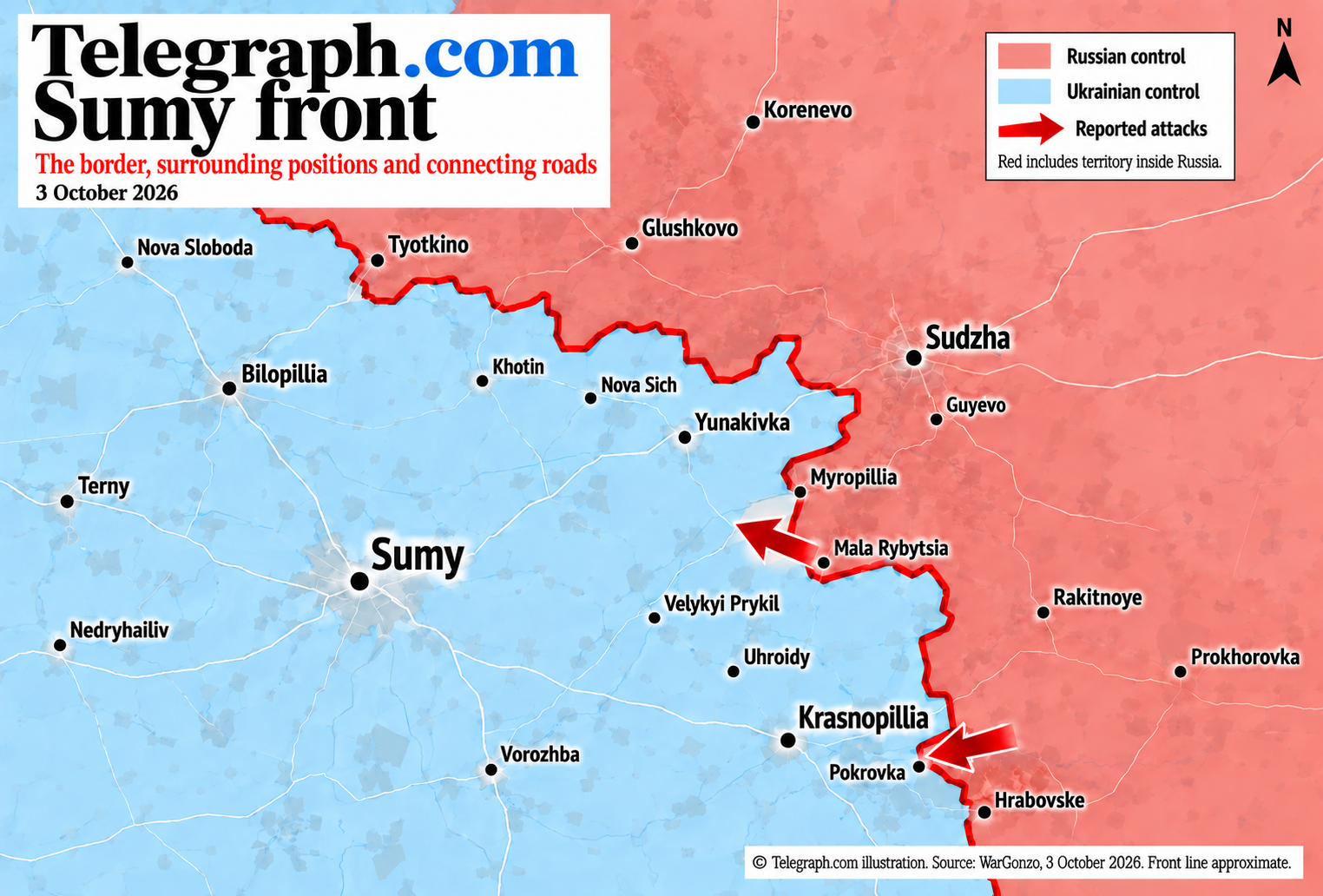
Their military significance nevertheless extends beyond the capture of individual villages. A threatened border requires observation, defensive positions and troops able to respond. Ukrainian commanders must judge whether an attack is a limited incursion, an effort to establish a lasting foothold or the opening of a larger operation.
That uncertainty consumes resources. Reinforcements held near Sumy cannot simultaneously defend a road in Donetsk or counterattack around Orikhiv.
For Russia, the border also offers the possibility of applying pressure at several points without first breaking through a continuous belt of urban defences. But any foothold inside Ukraine must still be supplied and protected. Moving forward exposes Russian troops to the same drone observation and attacks on communications that they seek to impose on their opponents.
The immediate assessment is therefore one of continuing local pressure. Its larger effect depends on how much Ukrainian strength it draws north and whether Russia can sustain the positions it establishes.
Northern Kharkiv: several points of pressure
The approaches around Lyptsi and the border villages remain contested, while Kupiansk constitutes a separate battle farther southeast.
North of Kharkiv, the fighting is spread across border settlements and the approaches associated with Lyptsi and the Travianske reservoir. Activity around Nova Kozacha adds another point at which Ukraine must watch for a developing threat.
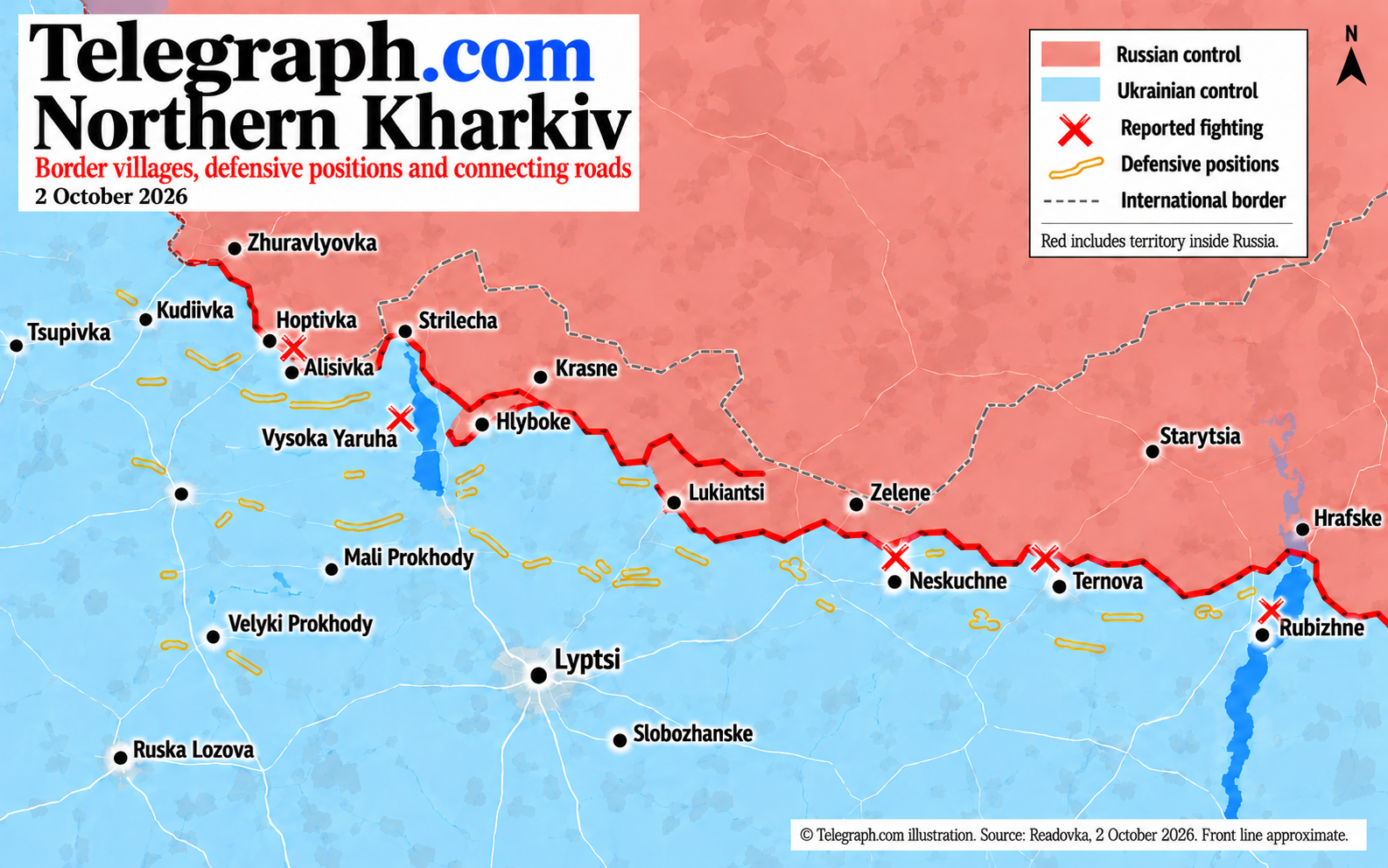
The geography encourages a fragmented battle. Villages provide cover and local defensive positions; open ground between them exposes movement; reservoirs and waterways limit the available approaches. Progress through one settlement does not necessarily open a broad route forward.
The apparent Russian purpose is to create several simultaneous demands on Ukraine’s northern defences. Ukraine must retain enough strength to contain those attacks while judging whether any one of them could develop into a more serious advance.
Farther southeast, Kupiansk and the Oskil River present a different operational problem. Kupiansk-Vuzlovyi, Kivsharivka and Novoosynove belong to a struggle involving railway facilities, river approaches and the positions connecting them. The corridor remains contested; local gains should not be mistaken for control of the whole area.
Across all four fronts, Russia appears to be pursuing the same broad outcome: force Ukraine to spend more troops, vehicles and ammunition sustaining positions that become progressively harder to hold.
That approach also imposes costs on Russia. Its own supply routes are watched, its infantry must cross exposed or mined ground, and its advances require protection against Ukrainian counterattacks. An opening may be found without being exploited quickly.
The decisive measure is whether this pressure produces lasting withdrawals. For now, the battlefield shows several attempts to bring that about, with different results in each sector. The struggle over the roads remains one of the clearest ways to understand how the fighting around individual towns could change the wider front.