Washington is striking Iranian targets while quietly tolerating the continued flow of Iranian oil, because the global energy system cannot absorb the sudden disappearance of those barrels without triggering a far larger crisis.
The war between the United States, Israel, and Iran has produced a paradox at the heart of global energy markets.
On paper, the United States has long maintained sweeping sanctions designed to choke off Tehran’s petroleum exports. In practice, however, Iranian crude is still reaching global markets in substantial volumes even as the conflict escalates.
Analysts tracking tanker movements through satellite imagery say Iran has continued loading shipments from its main export terminal on Kharg Island during the current confrontation. Energy monitoring data suggest that roughly 1.5 to 1.6 million barrels a day have continued to move onto tankers during the war.
At current prices, that trade is generating an estimated $160 million a day in revenue.
The reason is simple. Global oil markets cannot absorb the sudden disappearance of Iranian supply without triggering a much larger shock.
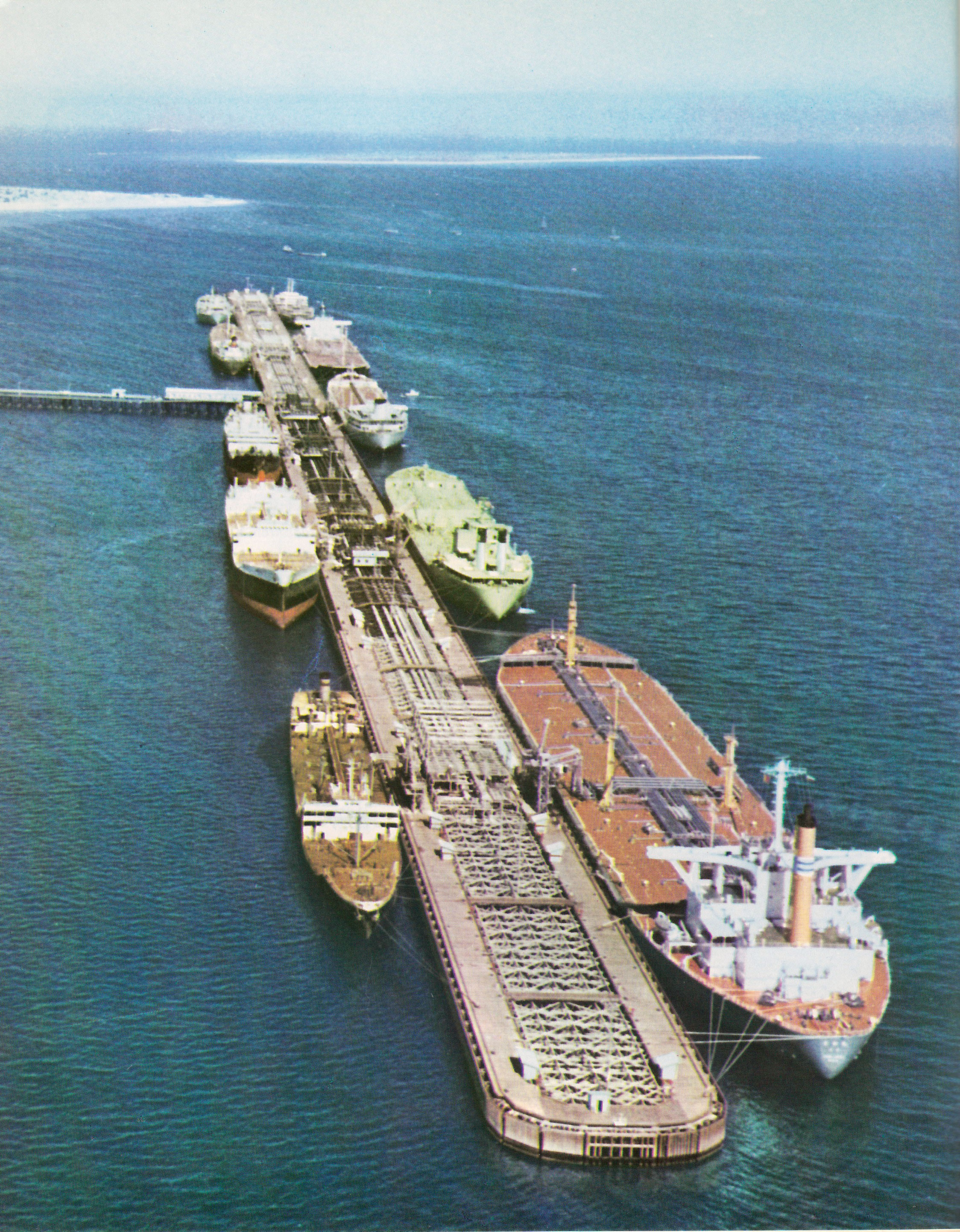
Kharg Island and the artery of Iran’s oil economy
Almost all Iranian oil exports have historically flowed through a single location, Kharg Island, a heavily fortified terminal in the Persian Gulf.
For decades the island has functioned as the main artery of Iran’s energy system. Vast storage tanks and loading jetties handle the bulk of the country’s crude exports, with supertankers capable of carrying up to two million barrels docking at the facility.
Destroying Kharg Island would severely damage Iran’s ability to export oil. Yet the United States has so far avoided striking the island’s core petroleum infrastructure.
Recent airstrikes reportedly targeted military installations on the island while leaving the export terminal itself largely intact.
That restraint reflects the uncomfortable reality facing policymakers in Washington and other Western capitals. If Kharg Island were destroyed, millions of barrels a day of supply could disappear from global markets almost overnight.
Why this matters today: The real story is not simply that Iran is still earning oil revenue during wartime. It is that Washington appears to understand it cannot fully enforce sanctions at the very moment when energy markets are already under extreme strain. That is the contradiction at the center of the war.
The energy system constraint
Oil markets operate on narrow margins between supply and demand.
Even small disruptions can send prices sharply higher. When those disruptions occur in the Middle East, the world’s most important energy producing region, the consequences are magnified.
The current conflict has already pushed Brent crude above $100 a barrel. Insurance costs for shipping through the Persian Gulf have risen sharply, and many tanker operators are reluctant to enter the region without security guarantees.
At the same time, production across the Gulf has been curtailed because exporters are struggling to move crude through the Strait of Hormuz.
This narrow waterway between Iran and Oman is the world’s most critical energy chokepoint. Roughly one fifth of global oil consumption passes through it every day.
If the strait were fully closed for an extended period, global supply chains would be severely disrupted.
The result would be an energy shock comparable to, and potentially worse than, the oil crises of the 1970s.

Why Washington is tolerating Iranian exports
In public, US officials insist sanctions on Iran remain in force.
In practice, however, enforcement appears to have become more flexible.
Statements from senior American officials suggest that Washington has deliberately allowed some Iranian shipments to continue leaving the Persian Gulf in order to stabilize global supply.
The logic is pragmatic. Removing Iranian oil from the market while the Strait of Hormuz remains under threat would likely drive prices far higher, potentially well beyond $120 a barrel.
That would have profound economic consequences, not only for energy importing countries but also for the United States itself.
Fuel prices remain politically sensitive, particularly in an election year. Sharp increases at the pump could quickly translate into domestic political pressure.
The result is a quiet recalibration of sanctions policy. Iranian oil exports remain officially prohibited, but in practice the flows are being tolerated.
The shadow fleet economy
Even before the current conflict, Iran had developed an elaborate system for evading sanctions.
At the center of that system is a network of vessels often described as the shadow fleet.
These ships operate outside the traditional maritime regulatory system. Many sail under obscure flags of convenience, rely on non Western insurers, and routinely switch off their tracking transponders.
Cargoes are often transferred between vessels at sea in order to disguise the origin of the oil.
This system expanded dramatically after Western sanctions on Russian energy exports created a parallel global market for sanctioned crude.
The result is a shadow trading network linking producers such as Iran and Russia with buyers willing to accept discounted oil.
Most of that crude ultimately ends up in Asia.
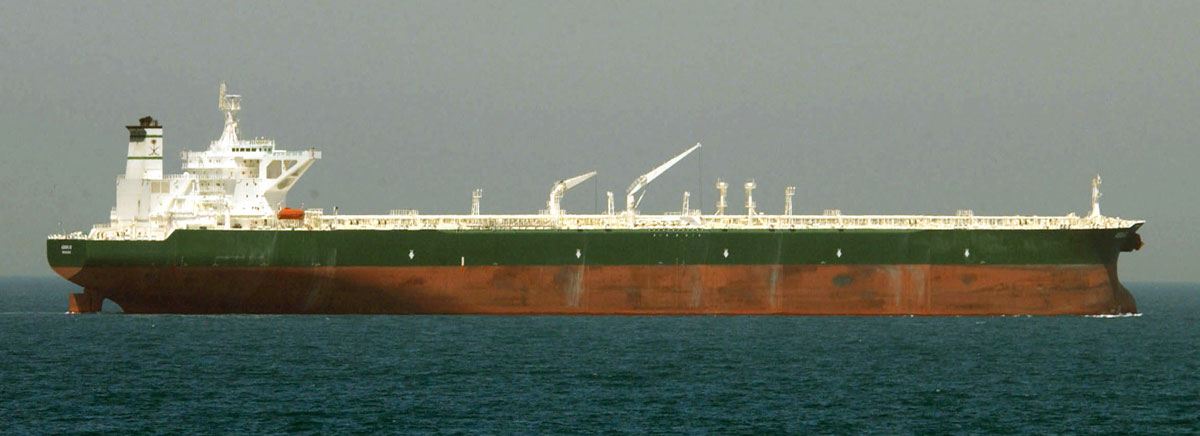
China as the terminal market
More than 90 percent of Iran’s oil exports are believed to be purchased by Chinese refiners.
Many of these buyers are small independent plants willing to purchase sanctioned crude at a discount.
For them the economics are straightforward. Iranian oil typically sells for several dollars a barrel below the price of Brent crude. That discount compensates for the legal and logistical risks involved in the trade.
The arrangement benefits both sides. Iran secures a steady stream of revenue despite sanctions, while Chinese refiners gain access to cheaper feedstock.
As long as that market remains open, completely shutting down Iranian exports becomes extremely difficult.
The Strait of Hormuz weapon
Iran’s most powerful strategic lever is not its oil exports themselves but its geographical position.
The northern shore of the Strait of Hormuz lies entirely within Iranian territory. From coastal missile batteries and naval bases along that shoreline, Tehran can threaten virtually all shipping passing through the narrow channel.
Iran’s military doctrine emphasizes asymmetric tactics designed to exploit this geography. These include anti ship missiles deployed along the coast, sea mines capable of blocking shipping lanes, fast attack boats that can swarm larger vessels, and drones used to track and harass commercial traffic.
The goal is not necessarily to destroy large numbers of ships. It is to create enough risk that insurers and shipping companies avoid the area.
Even limited attacks can disrupt trade.
The Gulf infrastructure risk
The vulnerability of the region’s energy infrastructure further complicates the situation.
Major facilities across the Gulf, including large Saudi processing plants and Qatari LNG terminals, handle enormous volumes of hydrocarbons. Yet these installations are highly concentrated and exposed.
If retaliation strikes targeted such facilities, the consequences could be far more severe than the closure of Hormuz alone.
Production losses across multiple Gulf states could remove millions of barrels a day from global markets.
That possibility is one reason why military escalation remains tightly constrained. Neither side can easily control the economic consequences once energy infrastructure begins to burn.

The strategic reality: Some hawks talk as if Kharg Island can simply be seized and the problem solved. That is fantasy. The island sits under Iranian missile cover, near the Iranian coast, and inside a wider escalation ladder that runs through Hormuz, Gulf export terminals, LNG infrastructure, desalination plants, and shipping insurance. Touch one part of that system and the whole structure shakes.
The Kharg Island dilemma
Some strategists in Washington have suggested that seizing Kharg Island might provide decisive leverage over Iran. On paper the idea appears straightforward. Capture the terminal and deprive Tehran of its primary source of export revenue.
In practice, however, the operation would be extraordinarily risky.
Kharg lies within range of Iranian coastal missile systems and is protected by layers of air defense. Any occupying force stationed on the island would be highly vulnerable to sustained attack.
Even if the United States managed to seize the facility, defending it against continuous missile and drone strikes could prove extremely difficult.
For that reason the proposal remains largely theoretical.
The limits of sanctions warfare
The current conflict highlights a deeper structural problem with modern sanctions regimes.
For decades Western governments relied on control over global financial systems, insurance markets, and shipping networks to enforce economic pressure on adversaries.
But the global economy has changed.
Russia’s invasion of Ukraine accelerated the development of alternative trade networks designed to bypass Western sanctions.
Iran’s shadow fleet is now part of a broader system that includes Russian oil traders, non Western insurers, and alternative payment mechanisms.
This parallel infrastructure makes it increasingly difficult to isolate energy producers completely.
Sanctions still impose costs, but they no longer guarantee total economic isolation.
Oil markets as the real battlefield
In many respects the war’s most important front lies not in the skies over Iran or the waters of the Persian Gulf, but in global energy markets.
Oil prices act as a transmission mechanism that converts regional conflict into global economic pressure.
Every missile strike near a tanker route or refinery echoes through financial markets. Governments thousands of miles away suddenly face rising fuel costs and political fallout at home.
That dynamic gives energy producers a powerful form of leverage. By threatening supply disruptions, they can influence decisions far beyond the battlefield.
The strategic reality
The paradox confronting policymakers is stark.
Completely shutting down Iranian oil exports might weaken Tehran economically. But doing so would also remove millions of barrels from a market already under strain.
The resulting price spike could trigger a global economic shock, one that would damage the very countries trying to enforce the sanctions.
For now the compromise is uneasy. Iran continues exporting oil, often through shadow networks and discounted sales to Asian buyers. The United States continues striking Iranian targets while quietly allowing some of those shipments to pass.
Both sides are effectively constrained by the same underlying system.
The energy system’s invisible hand
Wars in the Middle East have often been shaped by the global oil market. The current conflict may prove no exception.
Military planners can calculate missile ranges and troop deployments, but they cannot easily control the economic ripple effects of disrupted energy supply.
Oil markets operate as a powerful feedback mechanism. When prices rise too far, the pressure to de escalate becomes overwhelming.
That dynamic explains why Iran’s exports continue despite sanctions and despite war.
It also explains why Kharg Island, the artery of Iran’s oil economy, remains largely untouched.
The global energy system simply cannot function without the barrels that flow through it.
And until that reality changes, even the fiercest geopolitical rivalries must operate within its limits.
Image sources: Kharg oil loading terminal via Wikimedia Commons; Strait of Hormuz chokepoint map from the U.S. Energy Information Administration via Wikimedia Commons; Supertanker photograph via Wikimedia Commons; Khurais oil processing facility satellite image via Wikimedia Commons.