War with Iran: Does Anyone Still Have the Power to Stop a Process Already in Motion?
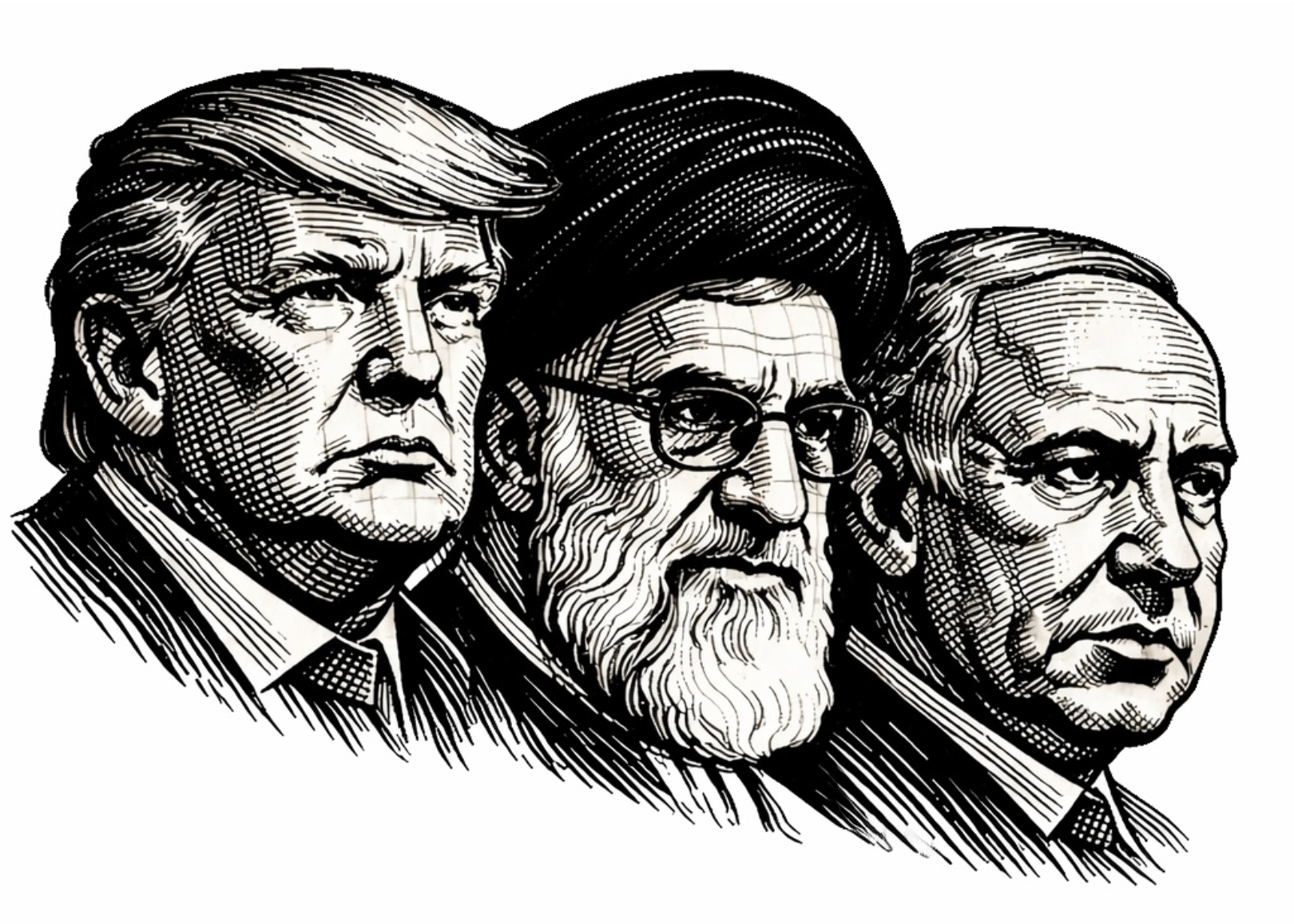
Speculation that the United States and Iran are approaching war is no longer marginal. Military deployments, diplomatic signalling, and regional positioning are now converging in ways that narrow room for reversal. Whether conflict erupts in days, weeks, or not at all remains uncertain. What is increasingly clear is that the machinery surrounding Iran is behaving as though war is approaching, even while every actor insists that no final decision has been taken.
Related reading on Telegraph Online
This essay continues an earlier chapter examining how force posture hardens into policy long before any formal decision is announced.
This essay does not argue that war with Iran is inevitable. It argues something more precise and more troubling. War is no longer being approached as a discrete political decision taken at a single moment. It is being treated as an accumulating process already underway. Force posture is solidifying into expectation. Political sunk costs are rising. And the assumptions guiding Washington, Israel, Iran, and the Gulf states are no longer mutually compatible.
In earlier crises, escalation remained visibly contingent. Governments debated. Options were openly weighed. A decisive act marked the transition from peace to war. Until that moment, restraint remained legible.
What distinguishes the present moment is that the decisive phase has moved earlier. The operational groundwork is being laid before any formal choice is acknowledged. Forces are positioned. Allies are aligned. Red lines are declared in advance. Each step is justified as precautionary and reversible. Each step also reduces the number of exits that remain politically usable. By the time a decision is announced, most alternatives have already been priced out of reach.
The logistics of inevitability
In late January, Vice President JD Vance described the regional buildup in language that matters less for what it promises than for what it normalises. The United States, he said, requires options. It has assets. It has personnel who could be endangered. And if Iran does something very stupid, Washington must be ready to respond.
The phrase doing the real work was protect our assets. It quietly reframed the theatre. This was no longer a region where force was being withheld pending deliberation. It was a region where force was assumed and needed to be insured against embarrassment.
Inside the system, options do not signify restraint. They mean target packages, basing permissions, munitions positioning, search and rescue planning, legal justification, and political narrative prepared in advance. At this point, capability begins to demand demonstration. Non use starts to look less like prudence and more like failure.
This is not fate or machinery acting alone. It is human agency constrained by reputation, fear of humiliation, and institutional inertia. Leaders are still turning the gears. What is disappearing is their willingness to reach for the brakes.
Diplomacy as a strategic liability
From Israel’s perspective, the issue is not merely whether Iran constitutes a threat. It is whether diplomacy itself has become dangerous. Political and security commentary during January repeatedly framed negotiation as stabilising the adversary, providing Tehran with domestic breathing space and international legitimacy.
This framing fundamentally alters the meaning of success. Once success is defined as dismantlement or regime replacement, compromise becomes indistinguishable from retreat. A deal is no longer an outcome. It is an interruption.
The result is a political wager. Delay becomes risk. Action becomes necessity. That logic does not remain confined to Israel’s internal debate. It presses outward, shaping expectations in Washington and narrowing the acceptable range of outcomes.
Readiness as a self sustaining state
On 25 January 2026, reporting described a meeting between the commander of United States Central Command and senior Israeli defence officials. The conclusions were specific. There was no date for an attack. The Americans required time to build sufficient force. At the same time, they were prepared for an immediate strike if ordered. The preference was described as a clean, swift, inexpensive operation. Regime replacement was treated as a live option.
Two days later, further reporting clarified that preparations were incomplete and that the window for action could be months away. In the same breath, it was emphasised that this did not preclude earlier action.
No date is not no plan. It is evidence that readiness has become decoupled from decision. The military machine is now idling at high speed regardless of whether political resolve has fully congealed.
Gulf restraint as volatility not control
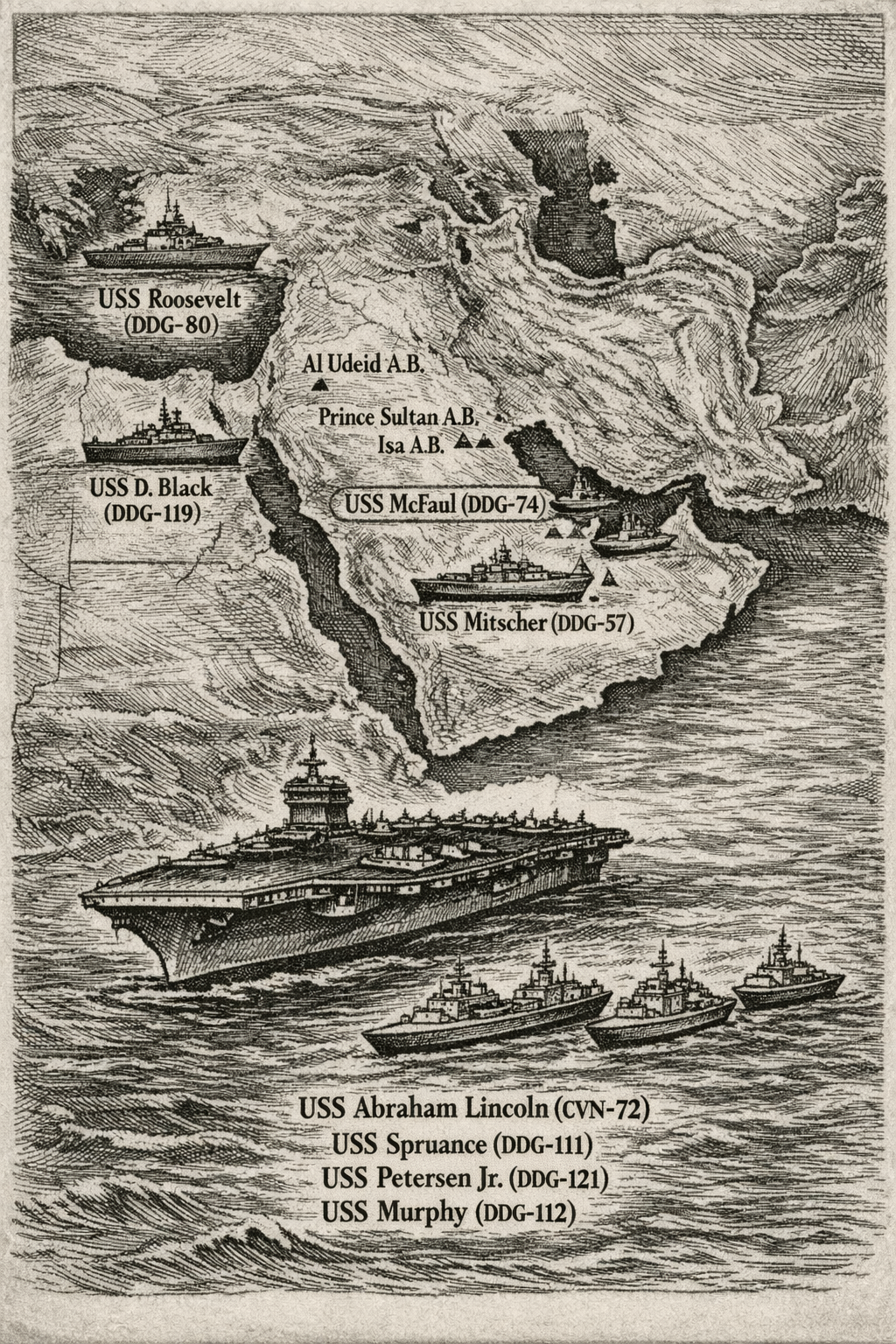
Across the region, several Gulf states and neighbouring powers have responded not by aligning, but by narrowing exposure. Airspace restrictions have been communicated. Quiet pressure has been applied to avoid entanglement. The message is consistent: do not assume our territory or infrastructure will be available.
This is often misread as a brake on escalation. In practice, it may increase instability. By closing predictable channels, these moves force any confrontation into narrower, less controllable pathways. Energy infrastructure, shipping routes, and domestic stability become hostage variables rather than buffers.
Restraint at the margins does not halt the process. It changes where and how it breaks.
The end of the symbolic strike
The most consequential shift described in the material provided to this publication is Tehran’s rejection of the symbolic strike model. This assessment rests not on rhetoric alone, but on the pattern of internal signalling, deterrence messaging, and operational posture observed since January.
The logic attributed to Iranian military analysis is stark. Limited strikes do not end conflict. They prolong it, preserving the shadow of war while steadily increasing economic and political costs.
Accordingly, Iran is described as having redefined its rules of engagement. Any United States attack would be treated as the opening of full scale war. Retaliation would be immediate and comprehensive. Israel would be targeted regardless of claims of non participation. Any regional platform used to enable an attack would itself become a target.
Pre commitment can deter. It can also eliminate the last remaining off ramps.
The Strait of Hormuz sits at the top of this ladder. It is not merely a military choke point. It is an economic one that pulls the global system into the conflict by default.
Where escalation control may already be weakening
Escalation control is often described as residing in leaders’ hands. In practice, it is shared with the system they have already built. Once force packages are assembled, alliances aligned, and narratives fixed, the system begins to demand validation.
The administration believes its own deterrence logic. The tragedy is not deception but miscalculation. When one side advertises readiness to strike and the other advertises comprehensive retaliation, the space for safe manoeuvre contracts rapidly.
A cold timeline of the crescendo
Early December 2025 saw unusual force movements in and around the region. On 28 December 2025, President Trump and Prime Minister Netanyahu met. In late December and early January, unrest inside Iran was elevated as a public frame while military preparations continued. On 13 January 2026, a strike reportedly did not proceed. By 14 January, a preferred operational window appeared in multiple accounts. On 25 January 2026, CENTCOM confirmed sustained readiness without a date. On 27 January, reporting clarified that action could be months away or sooner if ordered.
This sequence does not prove intent. It demonstrates continuity. Preparation has survived changes in justification, messaging, and tempo.
Stopping this process would now require a climb down so visible and so politically costly that no actor appears prepared to attempt it. By the time leaders recognise that the machinery has outpaced their intent, the price of stopping it may feel more terrifying to them than the war itself.
You might also like to read on Telegraph.com
Iran’s Protests Are Real. The Way They Are Being Used Is the Story
An examination of unrest inside Iran and how domestic instability is amplified and instrumentalised abroad.
At America’s Middle East Air Hub, the Machinery of Escalation Is Quietly Assembling
How force posture and logistics around Iran are hardening into policy long before any formal decision is announced.
When Iran Went Dark, the Protests Lost Their Oxygen
Why the shutdown of communications altered the trajectory of Iran’s winter protests.
Recasting the Region: Iran–Iraq Security Deal Narrows Israel’s Options
A look at how shifting regional alignments complicate Israel’s strategic calculus.
Will Israel Strike Iran Before Winter Closes In?
Assessing timing, precedent, and political pressure in Israel’s Iran debate.