The Language the City Forgot
Anonymous writes from South Williamsburg.
I wake early, before the street fills, before the day is explained by people who do not live it. That is when South Williamsburg sounds most like itself. Not quiet. Just unobserved. The language is already there. It does not arrive with the morning. It sits in the mouth like a habit, the way steam sits behind a bakery window before the door opens.
I walk down Lee Avenue and the shops begin their small rituals. A metal shutter lifts. A bell gives its thin announcement. A man steps out with keys and a paper cup and looks up the block as if checking the pulse of the day. The first smells are always the same. Warm bread. Sweet cake. Something fried. On Friday it is different. The street tightens. You feel the pressure before you see it. By midday the arguments are sharper, the lines longer, the nerves thinner. Everyone knows what happens if you are late.
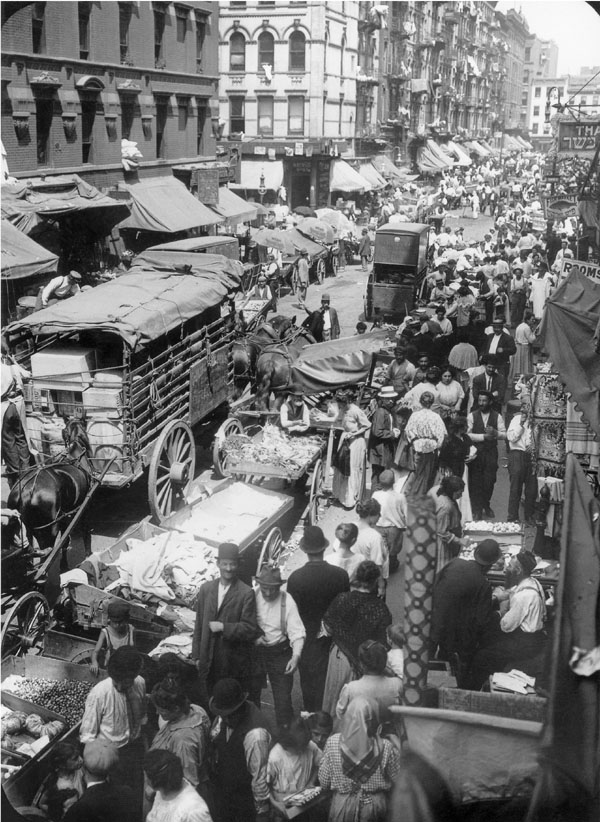
The signs are not for outsiders. They are for us. Yiddish on glass and paper, Yiddish on notices, Yiddish in the rhythm of buying and complaining and asking the same question twice because you want the answer you were raised with. The pushkes sit by the counters, nicked and dented, swallowing coins without ceremony. And the pashkevilim pile up on boards and poles, pasted one over another: announcements, warnings, faction notices, complaints nobody will admit writing but everyone reads. Sometimes you can tell which camp is unhappy just by which posters stay up longest.
That is what people miss. Yiddish here is not culture. It is plumbing. It carries the daily life whether you approve of it or not.
The home is where most minority languages go to die politely. Here it is where they harden. A child does not learn Yiddish as a subject. He is scolded in it before he understands grammar. Comforted in it before he understands choice. By the time English appears, the world already has a sound. That order matters. You cannot undo first instincts later, no matter how useful another language becomes.
The boys move toward cheder with that look they all get sooner or later, the look of knowing the day will be long. United Talmudical Academy buses grind down the street, collecting children block by block. Everyone knows which rebbe’s school your child is in by the bus colour and the drop-off pattern. Everyone also knows who wishes they could send their child somewhere else but can’t say it out loud.
English comes later, tacked on at the edges, when the mind is already trained to think elsewhere. People argue endlessly about what that does or doesn’t do to a boy. But linguistically the effect is simple: the language that owns the longest hours owns the instincts.
By midday the sidewalks thicken. Children spill out in clusters, cousins and neighbours mixed together, fights flaring and vanishing just as fast. Language usually slips here, when kids want whatever feels easiest. But ease is relative. When every joke, insult, alliance, and apology happens in Yiddish, switching feels artificial. You don’t need rules. You need density. We have that.
The shops keep it alive as much as the schools do. You can live here without translating yourself. You can buy meat, books, stationery, medicine, shoes, children’s clothes, ritual items, advice, and sometimes absolution, all in the same tongue. That matters. A language that cannot buy things does not survive long.
There are days it all feels too tight. Too crowded. Too loud. Too poor. Rent is always late for someone. Someone is always marrying off a daughter younger than they wanted to. Someone is always angry about which brother got the better apartment. The Aaron people and the Zalman people still watch each other closely, even if nobody mentions it unless they trust you. Outsiders think unity is natural here. It isn’t. It is enforced, negotiated, sometimes resented.
There is a thin wire running above us, easy to forget until it breaks. After storms people talk about it more than usual, about who forgot to check which pole, about whether it will be fixed before Shabbos. When it holds, the neighbourhood becomes one carried space. When it doesn’t, you feel how dependent the whole rhythm is on something most of the city never sees. During big days, like 21 Kislev, when the streets flood toward the gathering, you understand exactly why it matters.
Women move through the neighbourhood differently, not because anyone planned it that way, but because it had to work. They deal with offices, doctors, landlords, paperwork. English comes out when it is needed and disappears when it is not. Nobody makes speeches about it. It is not a theory. It is just how things are done. Inside, the home language stays the same. Outside, whatever works, works.
People ask whether this place is a fortress or a relic. They ask whether it can last. They ask whether the children will eventually leave. Some already do. Some sneak things. Some resent the pressure. Some never question it. All of that is true at once.
Yiddish did not survive here because we loved it more than others did. It survived because it was made unavoidable early and ordinary forever. It was never handed to children as a keepsake. It was handed to them as a tool.
I walk back north as the light softens, past the same shop windows now crowded, past the same voices layered over one another. A few visitors drift through, collecting impressions. They will leave with photos and theories. They will call this place a refusal, or a provocation, or a museum.
They will miss the point.
This is not a story being preserved. It is a system running, imperfectly, loudly, sometimes painfully, but still running. The language is part of that machinery. It does not ask to be admired. It just keeps going.
- Judaism — essays and reporting on Jewish history, faith, language, and community life.