The rise of artificial intelligence is no longer only about automation. A new economic system is quietly forming in which software agents can earn money, purchase services, and transact with each other without human involvement.
If this development continues, the world may soon see the emergence of the first autonomous machine economy. In that system, digital agents do not merely assist human activity. They participate in economic life themselves.
The implications reach far beyond technology. An economy composed partly of machines would reshape labour markets, financial systems, and global competition for technological power.
The Shift From Tools To Economic Actors
The most important economic shift of the artificial intelligence age is not automation but autonomy.
For decades computers were tools. They processed information, responded to commands, and executed instructions written by humans. Even the most advanced software remained inside that boundary. It could analyse data, generate text, or perform calculations, but it could not participate in the economy.
That boundary is now dissolving.
A new generation of AI systems can plan tasks, execute actions, manage digital resources, and transact with other systems. When these capabilities combine with digital payment infrastructure, something unprecedented begins to appear: a machine economy.
In this emerging system, software agents do not merely assist human economic activity. They begin to participate in it.
A Simple Framework For The Machine Economy
The transformation can be understood through a simple framework of three technological layers.
The first layer is intelligence. Modern AI models possess the ability to reason, analyse information, and generate complex outputs.
The second layer is agency. Software systems are increasingly able to pursue objectives independently by planning and executing sequences of tasks.
The third layer is economics. With digital wallets and programmable payments, those agents can transact.
When intelligence, agency, and economic capability converge, machines cease to be tools. They become economic actors.
The Rise Of AI Agents
Much of the public discussion around artificial intelligence still focuses on automation. AI writes emails, generates images, assists programmers, or analyses research.
Yet inside the technology industry a different development has been taking place: the rise of agent based systems.
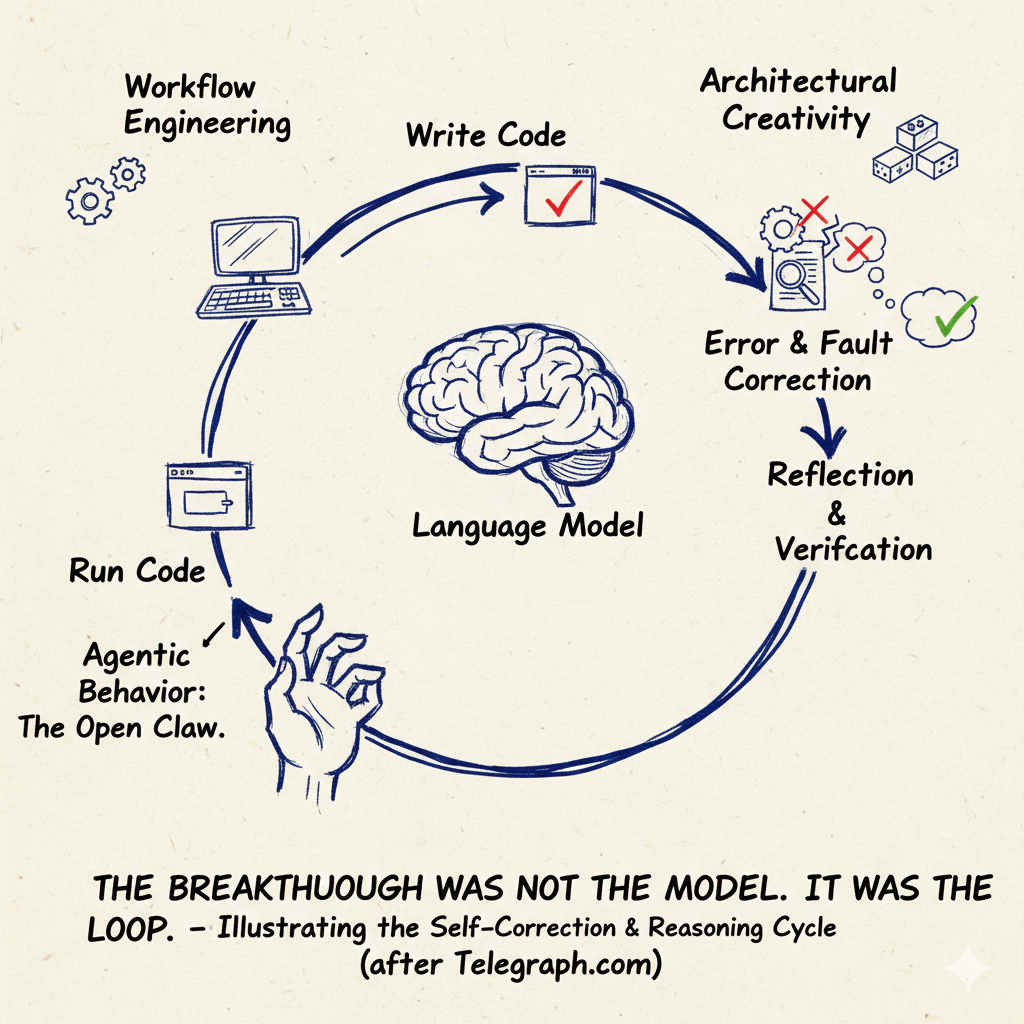
Unlike traditional software, AI agents do not wait for commands. They pursue objectives. An agent might be instructed to research a topic, develop a strategy, locate suppliers, or manage a project.
The agent then decomposes the objective into smaller tasks and carries them out, sometimes creating additional agents to handle parts of the work.
Early experimental systems demonstrated this capability in primitive form. Today the architecture is rapidly maturing. AI agents can browse the web, execute code, call external tools, query databases, and coordinate with other agents.
The key difference between an AI assistant and an AI agent is simple. Assistants provide answers. Agents perform tasks.
The Missing Ingredient: Money
For all this progress, one major limitation remained. AI systems could act but they could not transact.
Modern financial systems assume human identity. Opening a bank account requires documentation, verification, and legal status. Payment networks assume a human or corporate account holder.
Software entities do not easily fit into that framework.
Blockchain infrastructure changes the equation. On decentralised networks any software program can control a digital wallet. An AI agent can receive funds, send payments, and execute smart contracts automatically.
This technical detail carries enormous implications. Once an AI agent has access to a wallet, it can participate in economic exchange.
It can purchase datasets, rent computing resources, pay other agents for services, and collect revenue from users.
The agent becomes a small economic unit operating inside a digital marketplace.
The Machine Economy Explained
The emerging machine economy rests on three technological layers. Intelligence provides the cognitive capability through advanced artificial intelligence models. Agency allows those systems to operate as autonomous actors capable of planning and executing tasks. Economics adds the ability to transact through programmable payments and digital wallets. When these layers combine, software systems can purchase resources, sell services, hire collaborators, and manage revenue streams. The result is a network of autonomous digital actors coordinating through markets rather than direct human control.
The Birth Of Machine To Machine Markets
Developers are already experimenting with economic systems built entirely around AI agents.
Agent marketplaces are beginning to appear where software programs advertise services, negotiate prices, and execute contracts automatically. One agent might specialise in analysing data. Another may generate images or conduct research.
These agents interact with each other through programmable agreements and exchange services in return for digital payment.
What emerges is a machine to machine service economy.
A human user might commission an AI agent to complete a project. That agent could then hire other agents to perform parts of the work and pay them directly from its digital wallet.
The entire economic chain could occur with minimal human involvement.
When Machines Begin Hiring Humans
One particularly striking development is the appearance of systems where AI agents can hire humans.
Experimental platforms already allow software agents to post tasks that require physical action. A human worker might be asked to photograph a location, deliver an item, or perform some real world task that the AI cannot carry out itself.
Payment is handled automatically through digital infrastructure.
This reverses the familiar narrative of automation. Instead of humans hiring machines, machines begin hiring humans.
The system remains small and experimental, but it illustrates the architecture of a machine economy.
The Strategic Implications
If autonomous AI economies scale, the implications extend far beyond the technology sector.
An AI agent could theoretically earn revenue, pay for its own computing infrastructure, and finance improvements to its own capabilities. Such a system would begin to resemble a self sustaining digital entity.
The regulatory implications are uncertain. Governments regulate individuals and corporations through legal identity and financial oversight. An autonomous software agent may operate across multiple jurisdictions simultaneously.
This creates a new category of economic actor that does not fit easily within existing institutions.
The geopolitical dimension is equally important. The global race for artificial intelligence dominance has focused on semiconductors, computing power, and algorithmic breakthroughs.
The emergence of a machine economy introduces another question: who will control the infrastructure of autonomous digital markets.
The First Non Human Economy
The first phase of the artificial intelligence revolution transformed information. Machines learned to process language, images, and knowledge.
The second phase is transforming labour as software systems perform tasks once carried out by humans.
The third phase may transform economics itself.
When machines can earn revenue, allocate resources, and coordinate with other machines through markets, they cease to be tools.
They become participants in economic life.
The first autonomous AI economy may already be taking shape beneath the surface of today’s technology platforms. If it continues to develop, the coming decade may witness the birth of the first economic system in history not designed primarily for humans.
And once such a system exists, it will not easily be switched off.