This is not 1973. It is an oil shock hitting a deindustrialised reserve currency empire
by Jaffa Levy
·
It would be a grave mistake to treat the present energy crisis as a replay of the 1970s. The old oil shock struck a manufacturing America near the height of its industrial primacy, before China became the workshop of the world and before the dollar system evolved into today’s debt soaked, financialised reserve regime. This one is different in structure, transmission and political consequence, and the error begins the moment policymakers assume the old template still fits.
The comparison with the 1970s is understandable. A Middle Eastern war threatens a vital energy artery. Oil prices jump. Central bankers begin speaking in the old language of inflation risk, second round effects and policy credibility. Investors reach reflexively for the last great historical analogy. But the analogy is too blunt to do serious work. It risks sending readers, policymakers and markets toward the wrong conclusion.
This article argues something more precise. The present shock does not hit the same kind of America, or the same kind of world economy, that absorbed the Opec crises. It is not simply an oil price event. It is a systems shock striking a deindustrialised reserve currency empire: an America less dependent on imported crude at the dock, but far more dependent on external manufacturing, foreign savings, Treasury absorption, offshore dollar plumbing and the continued political credibility of its security guarantees. In 1973, an oil shock hit a productive hegemon. In 2026, it hits a financial hegemon. That is the decisive difference.
The first point is structural. In the early 1970s, the United States was still recognisably a manufacturing power in social as well as economic terms. FRED’s historical employment series shows manufacturing accounted for about a quarter of employment in the early 1970s, whereas the most recent BLS and FRED data show roughly 12.6 million manufacturing jobs in February 2026 and a far smaller share of total employment today. On the output side, manufacturing represented only 9.5 per cent of GDP in the third quarter of 2025. That alone should caution against lazy historical parallels. The 1970s oil shock hit an economy that still made things on a large domestic scale. The present one hits an economy that still produces a great deal, but whose commanding heights lie far more in services, finance, intellectual property and state backed monetary privilege.
The first structural break
In the early 1970s, US manufacturing still accounted for roughly a quarter of employment. By February 2026, manufacturing payrolls were about 12.6 million, and manufacturing value added was only 9.5 per cent of GDP in the third quarter of 2025. The shock is therefore landing on a materially different economic structure from the one hit in 1973.
The second point is monetary and geopolitical. It is wrong to say the dollar lacked hegemony in the 1970s. It did not. But the nature of dollar power was different. Under Bretton Woods, the dollar was central inside a system still formally tied to gold at $35 an ounce for foreign monetary authorities. Even after the Nixon shock, that world retained the institutional memory of a productive America underwriting the system. Today’s dollar order is looser, wider and more coercive. It rests not on gold convertibility but on Treasury markets, offshore dollar finance, reserve management, sanctions capacity and the continued willingness of the rest of the world to hold US paper. IMF reserve data still show the dollar as dominant, with 56.32 per cent of allocated global reserves in 2025Q2, but that dominance now sits inside a more openly financialised architecture.
That change matters because the present oil shock is not merely testing the cost of energy. It is testing the credibility of the wider system that prices, finances and insures energy flows. Reuters reported this week that the Iran war is shaking the foundations of the Gulf petrodollar arrangement, precisely because Gulf monarchies are reassessing what dollar pricing and US protection still buy them. Saudi Arabia now sells around four times as much oil to China as it does to the United States, and Gulf states have already been experimenting at the margins with non dollar trade channels. In other words, the energy map and the monetary map no longer sit as neatly on top of American power as they once did.
The third point is that there was no China in the modern systemic sense in 1973. That should be obvious, yet it is astonishing how often it is ignored. China was not then the factory floor of the world economy, not the principal marginal buyer of Gulf crude, not the key industrial sink through which Middle Eastern energy was converted into finished goods for global consumption. Today it is central to all three. That means a Hormuz shock now travels first through an Asian centred production system, not merely through the Atlantic economies that dominated the old oil order. Reuters and AP reporting on Hormuz disruption both point to Asia’s vulnerability, and Reuters’ reporting on the petrodollar makes clear that the Gulf’s commercial future is increasingly tied eastward.
This is where the media framing misses the deeper mechanism. The old story was that oil producers taxed Western industry. The new story is that a chokepoint shock impairs the energy inputs of Asia’s manufacturing belt, scrambles shipping and insurance, raises petrochemical costs and then sends the inflationary and deflationary effects back through Western bond markets, consumer prices and external balances. Reuters reported today that the war has already choked petrochemical supply through Hormuz, sent plastic prices to four year highs and sharply increased costs for manufacturers in Asia and Europe. That is not a simple replay of the 1970s. It is a supply chain and circulation shock in a world built on offshore production.
China changes the entire comparison
In 1973, the core industrial consumers were the US and Western Europe. In 2026, the critical downstream question is what happens to Asian manufacturing chains and Chinese demand. Saudi Arabia now sells roughly four times as much oil to China as to the US, and the Hormuz disruption is already driving up petrochemical and naphtha related costs across Asia and Europe.
The fourth point is more subtle. America is no longer the straightforward energy dependent importer it was for much of the postwar era. According to the EIA, the United States became a net exporter of petroleum in 2020 and has been an annual net total energy exporter since 2019. Reuters notes that the US is now the world’s largest oil producer, pumping around 13.6 million barrels a day. That changes the transmission mechanism. It does not make the country immune. America is less exposed as a pure importer of barrels, but it remains exposed to global oil pricing, freight dislocation, shipping insurance, refinery imbalances and the knock on effects on allies and supply chains. The vulnerability has shifted from direct import dependence toward systemic market dependence.
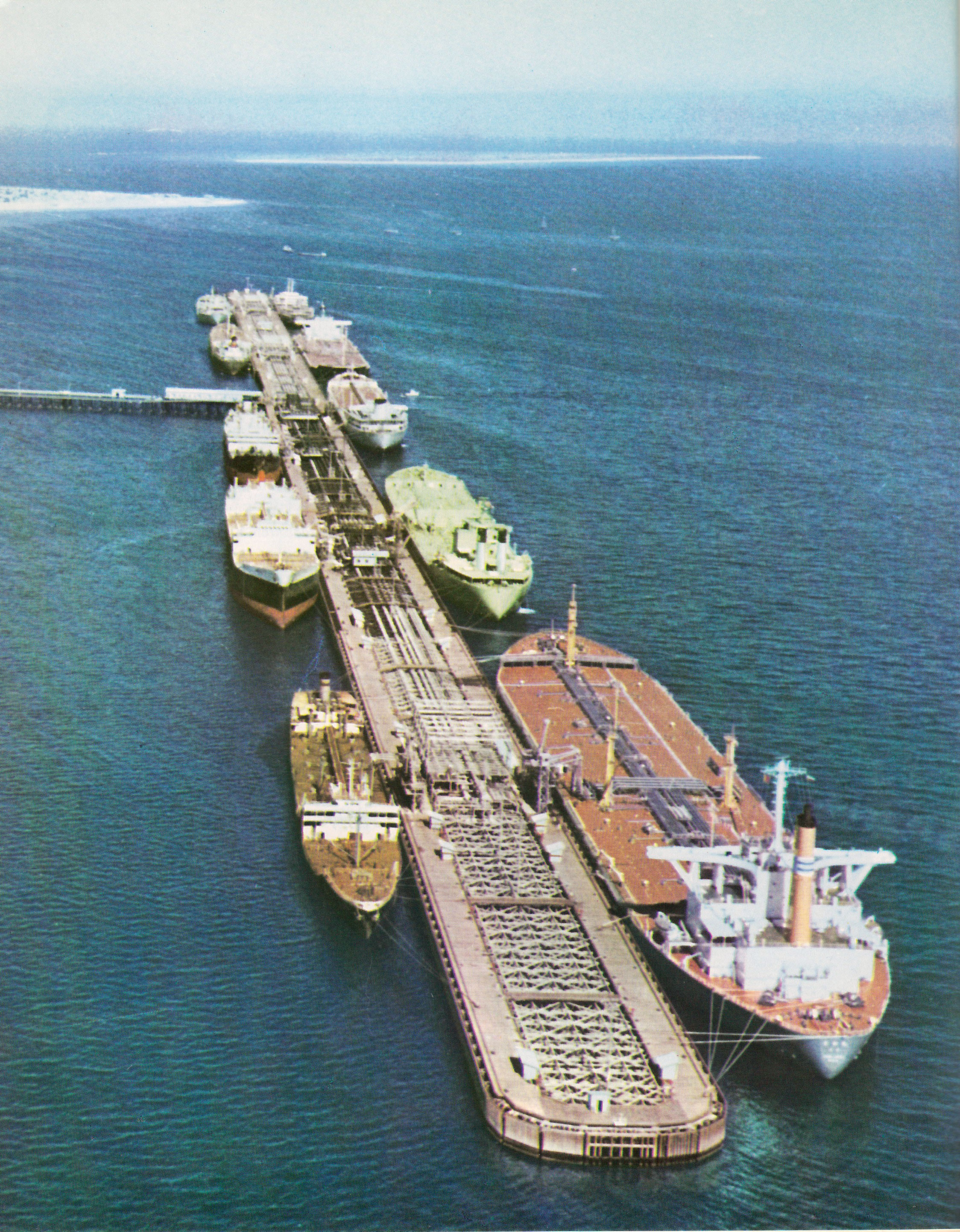
That is why the Strait of Hormuz matters in a different way from the old embargo stories. AP reports that traffic through the strait has fallen dramatically and that Iran is operating a de facto toll booth regime. Reuters reports that Saudi Arabia has diverted large volumes through Yanbu and that tanker rates and rerouting costs have surged. Barclays has estimated that a prolonged Hormuz closure could remove 13 million to 14 million barrels a day from the market. Once the issue becomes circulation rather than simply extraction, the first economic effects appear in freight, insurance and scheduling before they fully appear in the wage bargain.
The fifth and perhaps most important difference is debt. The 1970s shock hit a rich industrial hegemon. This one hits a debtor hegemon. CBO projects federal debt held by the public at 101 per cent of GDP at the end of 2026, rising to 108 per cent by 2030 and 120 per cent by 2036. BEA reports that the US net international investment position was minus $27.54 trillion at the end of the fourth quarter of 2025. That is the real structural break. Domestic stability in the United States now depends not only on the productive economy at home but on the continued foreign absorption of Treasury issuance and continued global confidence in dollar assets.
This is the point at which the 1970s analogy becomes actively misleading. Back then, the core fear was that oil would set off a wage price spiral that central banks would mishandle. That risk has not vanished entirely, but it is no longer the only or even the primary danger. Today’s more immediate danger is a state market squeeze. Higher oil raises inflation expectations just as public debt loads are historically heavy, growth is weak and bond markets are less patient. Fed governor Lisa Cook has already said the Iran war has shifted the balance of risks toward inflation. Bank of England policymaker Alan Taylor has argued that the uncertainty is so high that rates should be held until the war’s effects are